The ROI Equation: When Humanoid Robots Actually Pay for Themselves
A Data-Driven Analysis of 2026 Deployment Economics, Price Compression, and the RaaS Revolution
Introduction: The Year the Math Changed
In June 2026, a Chinese company called Noetix Robotics listed a full-size humanoid robot for 9,998 yuan ($1,380) — subsidized price as low as 9,418 yuan ($1,300). A few months earlier, Unitree Robotics launched its dual-arm R1 humanoid at 26,900 yuan ($3,968) . The market's price floor had collapsed from $50,000 in 2023 to below $2,000 in less than three years.
These numbers are not theoretical. They represent a fundamental shift in the economics of embodied intelligence. When a humanoid robot costs less than a family vacation, the ROI calculation changes from "if" to "where and how fast."
This article examines the real economics of humanoid robots in 2026 — not from manufacturer spreadsheets, but from deployment data, market analyst reports, and verified case studies. We cover: the price decline trajectory, the RaaS vs. purchase decision, real-world ROI from BMW and warehouse deployments, the hidden cost traps, and a strategic framework for when to buy, lease, or wait.
Part 1: The Price Collapse — From $250,000 to $1,300 in Three Years
The humanoid robot price trajectory is unlike anything the industrial automation industry has ever seen. Traditional industrial robots have seen gradual, predictable price declines of 3-5% annually. Humanoid robots are on an exponential curve.
The Price Ladder
| Year | Entry Price | Notes |
|---|---|---|
| 2023 | $50,000–$250,000 | Early commercial units; research platforms |
| 2024 | $30,000–$150,000 | ~40% YoY cost reduction |
| 2025 | $5,900–$150,000 | Unitree R1 at $5,900 shocks the market |
| 2026 | $1,300–$150,000 | Noetix Bumi at $1,380; Unitree G1 at $13,500 |
| 2027 (projected) | <$10,000 | Industry consensus mass-adoption threshold |
| 2030 (projected) | ~$5,000 | UBTech forecast: avg price $17K by 2030 |
Sources: Unitree official store, PConline (June 2026), China Daily (June 2026), Humanoid-Jobs.com, IDTechEx (May 2026)
What Drove the Collapse
The price crash is not a single phenomenon but the convergence of four structural forces:
1. Chinese Manufacturer Aggression
Unitree's prospectus reveals their average humanoid robot selling price fell from 593,000 yuan ($81,800) in 2023 to 167,000 yuan ($23,000) in the first three quarters of 2025 — a 72% reduction. Leju Robotics' Kuavo series dropped 26% year-on-year to 308,100 yuan ($42,500) per unit in 2025. Every major Chinese manufacturer is chasing the price down.
2. Component Localization
Unitree now produces more than 90% of its core components in-house — including motors, reducers, and lidar sensors. Their average production cost declined from 73,200 yuan in 2023 to 62,200 yuan by Q3 2025. As supply chains built for electric vehicles and consumer electronics are repurposed for humanoid production, this trend accelerates.
3. Scale Production
China's humanoid robot sector shipped 14,400 units in 2025, according to GGII. Output is projected to surpass 100,000 units in 2026, potentially reaching 200,000. When production scales from thousands to hundreds of thousands, unit costs collapse — exactly as they did for EVs, solar panels, and batteries.
4. The Actuator Bottleneck Is Cracking
The primary remaining cost barrier — high-precision actuators and gear reducers — is being modularized and mass-produced. Roland Berger estimates the actuator market alone will reach $26–79 billion by 2035. Companies that solve the actuator cost problem at scale will have a decisive manufacturing advantage.
The Current Price Tiers (June 2026)
| Tier | Price Range | Models |
|---|---|---|
| Consumer | $1,300–$4,000 | Noetix Bumi, Unitree R1 dual-arm |
| Entry Industrial | $13,500–$25,000 | Unitree G1, EngineAI T800, 1X NEO |
| Mid Industrial | $25,000–$90,000 | Unitree H2, Fourier GR-2 |
| High-End Industrial | $90,000–$150,000 | AgiBot A2, Figure 02 |
| Premium | $150,000–$420,000 | Agility Digit, Boston Dynamics Atlas |
Sources: Unitree, Noetix, EngineAI, 1X Technologies, AgiBot, Figure AI, Agility, Boston Dynamics official and verified pricing (Q2 2026)
Key insight: A mid-tier humanoid robot in 2026 costs 8-15% of the annual fully-loaded cost of a US manufacturing worker ($156K/year) . At this ratio, the ROI question becomes not "if" but "how many."
Part 2: Real-World ROI Case Studies
Case Study 1: Figure 02 at BMW Spartanburg — The Most Verified Industrial ROI
The strongest evidence for humanoid robot ROI comes from Figure AI's deployment at BMW's Spartanburg, South Carolina plant. According to Figure AI's production report:
- 90,000+ parts loaded across 30,000+ X3 vehicles
- 1,250+ hours of runtime
- 99%+ placement accuracy at 5mm tolerance
- 37-second average load time per part
- 95%+ uptime (improved from initial 85%)
ROI Math:
- US manufacturing labor: ~$156K/year fully loaded per worker
- Robot cost (Figure 02): estimated $130K–$150K
- Annual operating costs: ~$15K (electricity, maintenance, software)
- Payback period: ~12–18 months in high-utilization environments
Figure AI also offers RaaS pricing at approximately $1,000/robot/month, including hardware, software updates, maintenance, and support — shifting from CapEx to OpEx entirely.
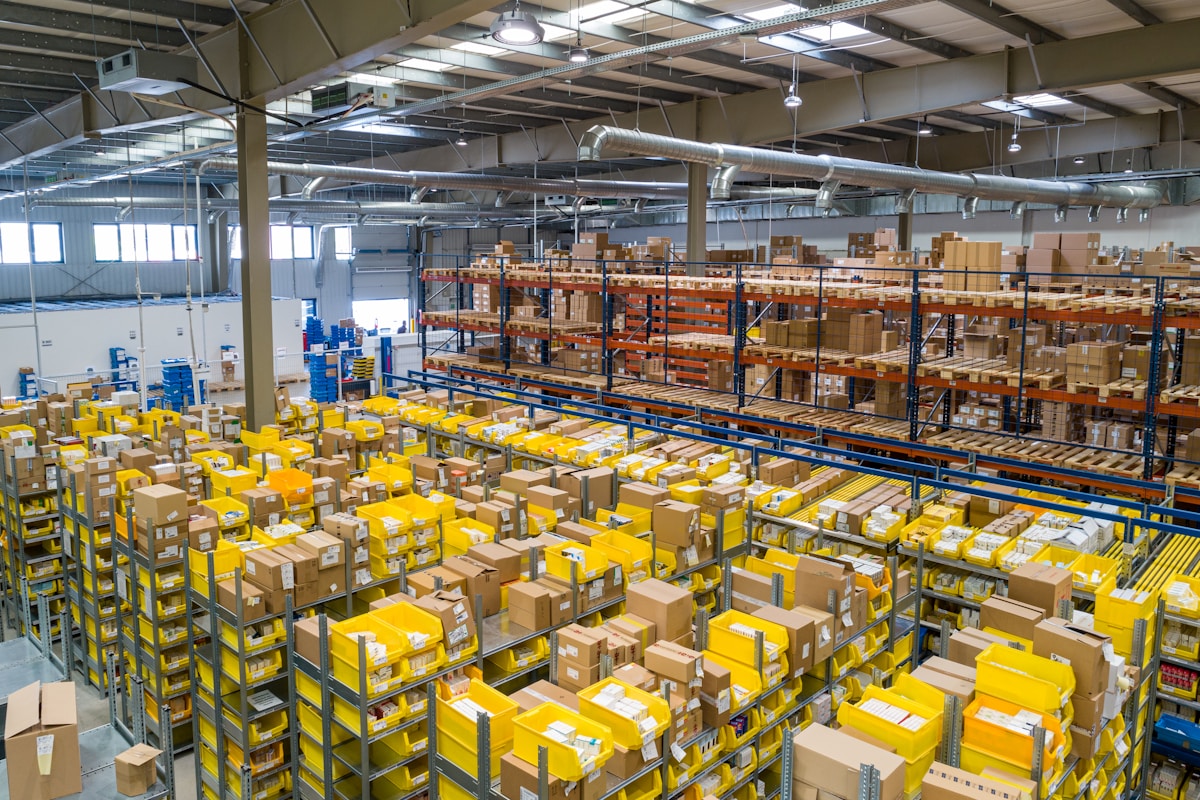
Case Study 2: Agility Digit at GXO Logistics
Agility's Digit robots have logged commercial hours at GXO's Spanx warehouse in Georgia — the company's first revenue-generating customer deployment. Key metrics:
- 18–30 month payback period against $30–45/hour fully loaded warehouse labor
- 2–3 shifts possible with battery swap
- 0.1–0.5% error rate vs. 1–3% for human pickers
- 150%+ turnover in comparable warehouse roles creates hidden replacement costs
Case Study 3: The Chinese Warehouse Benchmark
Geek+ (极智嘉) launched the Gino 1 in February 2026 — a warehouse-specific humanoid priced for Chinese market conditions:
- One robot replaces 3 warehouse pickers (annual savings: ~450,000 RMB / $62,000)
- Unit cost: ~800,000 RMB ($110,000), dropping to 500,000 RMB ($69,000) at scale
- Payback period: under 2 years
At Chinese wage rates (lower than US but with severe turnover), the economics already work for high-velocity fulfillment operations. As prices fall further, the addressable market expands exponentially.
Case Study 4: The Rental Market Transformation
China's robot rental market provides the clearest signal of positive ROI from the buyer's perspective. In early 2025, a single Unitree G1 commanded ¥15,000–20,000/day ($2,000–$2,700) in rental fees. By May 2026, daily rates had fallen to ¥3,000–5,000 ($400–$700) — a 70-80% decline — as supply overwhelmed demand.
At the peak, rental buyers achieved payback in under 10 days — a nearly 3,600% annualized ROI. Even at today's normalized rates, a robot priced at ¥300,000 generating ¥3,000/day achieves payback in 100 days. This explains why China now has over 1,500 robot rental companies and platforms like 擎天租 managing 3,000+ robots nationwide.
Part 3: RaaS vs. Purchase — The Great Business Model Divergence
One of the most significant developments in 2026 is the maturation of Robot-as-a-Service (RaaS) as a viable alternative to capital purchase. The choice between the two fundamentally reshapes ROI calculations.
RaaS Pricing Landscape (2026)
| Model | Provider | Pricing Model | Monthly Cost | Effective Hourly Cost |
|---|---|---|---|---|
| 1X NEO | 1X Technologies | Subscription | $499/month | ~$3.10/hr (8hr/day) |
| Figure 02/03 | Figure AI | Per-robot/month | ~$1,000/month | ~$6.25/hr |
| Industrial AMRs | Various | Per-hour | $5–$12/hr | $5–$12/hr |
| Humanoid (industrial) | Various | Flat rate | $2,500–$8,000/month | ~$8–$16/hr |
| Sanctuary AI Phoenix | Sanctuary AI | Per-hour | $25/hr | $25/hr |
Sources: 1X Technologies, Figure AI, Robotomated RaaS Guide (2026)
When RaaS Wins
First deployments or pilots: If you haven't operated humanoid robots before, RaaS eliminates capital risk. If the deployment fails, you cancel the contract rather than owning a depreciating asset.
Rapid technology evolution: Humanoid robot capability is improving dramatically year-over-year. A robot purchased in 2026 will be significantly less capable than 2028 models. RaaS enables upgrades at contract renewal without capital loss.
Capital constraints: Businesses that can't allocate $30K–$150K per unit can access the same technology through operational expenditure.
Variable demand: Seasonal businesses benefit from per-hour RaaS pricing that scales with demand.
When Purchase Wins
High utilization guaranteed: If a robot operates 16–20 hours/day, 300+ days/year, purchase is almost always cheaper than RaaS over a 3–5 year horizon.
The math: For a $40,000 robot with 5-year useful life at 16hr/day, 300 days/year:
- Purchase cost per hour: ~$3–$5/hr (including maintenance)
- RaaS cost per hour: $10–$30/hr
- At high utilization, purchase is 3–10x cheaper per hour
Data sensitivity: Organizations handling sensitive data (defense, pharma, finance) may prefer ownership for data control.
Break-even point: RaaS vs. purchase break-even occurs at approximately 19–20 months for most humanoid models. Beyond that, purchase yields 20–35% savings.
Part 4: The Hidden Cost Traps
Even favorable headline ROI conceals complexity. Every deployment should budget for:
1. Integration Engineering: $100,000–$500,000
Connecting robots to WMS, MES, and ERP systems requires substantial custom engineering. This is the single most underestimated cost in humanoid deployments.
2. Supervision Overhead: 1:5–10 initially
Budget for one supervisor per 5–10 robots initially, potentially improving to 1:20–30 as systems mature. This partially offsets labor savings.
3. Facility Modifications: $50,000–$200,000
Charging infrastructure, safety barriers, floor markings, and network upgrades are rarely included in base pricing.
4. Software and Licensing: $2,000–$10,000/year
AI updates, fleet management, and ongoing technical support typically require annual subscriptions.
5. Insurance: Unpredictable Premiums
Robot liability insurance is an emerging market. Early adopters face higher costs as insurers build actuarial models.
6. The Utilization Trap
ROI models assume multi-shift utilization. A robot deployed for single-shift operations may never achieve positive ROI versus a human working the same hours. Multi-shift deployment is essential for compelling economics.
Part 5: The Four Business Models of Humanoid Commercialization
The 2026 market has crystallized around four distinct monetization approaches, each with different ROI profiles:
1. B2B Hardware Sales (整机销售)
The simplest model: sell standardized robots to developers, educators, and enterprises. Unitree and Noetix lead this approach. Advantages: short sales cycle, direct revenue, scale economics. Limitation: pure hardware competition drives prices toward commodity margins.
2. Project-Based Solutions (项目制解决方案)
Custom integration for industrial clients, including hardware, software, and deployment services. Used by UBTECH, AgiBot, and Fourier for factory deployments. Higher margins but lower scalability.
3. RaaS/Leasing (租赁/RaaS)
The fastest-growing model. Platforms like 擎天租 manage fleets of robots across multiple clients, charging by time or outcome. Agility's GXO partnership and Figure AI's BMW deployment both use RaaS variants. This model shifts robots from capital assets to service infrastructure.
4. Data & Platform Services (运营与数据服务)
The long-term ambition: every deployed robot generates operational data that feeds into AI training loops. Companies that control the data flywheel — deployment → data → better models → more deployment — build self-reinforcing competitive advantages. This is the model that could produce the highest long-term ROI for manufacturers themselves.
Part 6: Strategic Framework — Buy Now or Wait?
Based on our analysis of 2026 pricing, ROI data, and market trajectories:
| Your Situation | Recommendation | Rationale |
|---|---|---|
| Labor costs >$150K/year (US mfg) | Buy now | ROI <3 months; waiting costs more in lost productivity than hardware savings |
| Immediate productivity needs | Buy now | Can't afford 2–3 year delay; early learning curve advantage |
| Pilot program planned | Buy now (or RaaS) | Build expertise before mass deployment; RaaS reduces capital risk |
| Labor costs <$100K/year | Wait until 2027–2028 | ROI extends to 12+ months; prices will drop 40%+ |
| Non-critical applications | Wait | Gen 2 models will be more reliable |
| Tight budget constraints | Wait | Price drop significant enough to justify delay |
| First-time deployment | Use RaaS | Minimize risk; upgrade path when ready |
| Chinese market operations | Buy now | Prices already below $4,000; domestic competition is fierce |
Part 7: The Market Outlook
Current Market Size (2026)
- $4–5 billion global humanoid robot market
- 39.2% CAGR projected through 2030
- 90,000+ units estimated global shipments (Bank of America)
- Chinese manufacturers control ~90% of global unit volume
Analyst Projections
- Goldman Sachs: $38 billion market by 2035 (6x upward revision from $6B)
- Morgan Stanley: $5 trillion total market opportunity by 2050
- Citi GPS: 648 million total humanoid units by 2050
- Roland Berger: $750 billion OEM market by 2035
The Price Trajectory
- UBTech: average price $35K (2025) → $17K (2030) = 51% reduction
- IDTechEx: average selling price $114,700 (2024) → ~$37,000 (2030)
- Consumer threshold: <$10,000 achievable by 2027–2028
- Mass adoption threshold: <$5,000 achievable by 2030
Conclusion: The ROI Verdict
Humanoid robot ROI in 2026 is real — but conditional. The data from real deployments tells a clear story:
Where ROI works today: Structured warehouse operations (18–30 month payback), high-volume manufacturing (12–18 months at US labor costs), and event rental (sub-100-day payback in China).
Where ROI is emerging: Consumer markets at sub-$4,000 price points, where humanoids become impulse purchases rather than capital decisions.
Where ROI remains elusive: Unstructured environments requiring dexterous manipulation, complex multi-step processes, and single-shift deployments.
The trajectory is unmistakable. Prices are falling 40%+ annually. Production capacity is scaling from thousands to hundreds of thousands. Real deployment data is accumulating. Goldman Sachs revised its market projection upward by 6x — one of the most significant upward revisions in the robotics industry's history.
But the hype-to-reality gap remains. The organizations that will benefit most are those that match robot capabilities to appropriate use cases, account for hidden integration costs, and leverage RaaS to reduce deployment risk.
The math finally works. The question is not whether humanoid robots can pay for themselves — but where, when, and under what conditions.
Key Data Sources:
- Figure AI Production Deployment Documentation (BMW Spartanburg, 2025–2026)
- Unitree Prospectus and Official Pricing (2025–2026)
- Noetix Robotics Bumi Launch (PConline, June 2026)
- China Daily Humanoid Robot Feature (June 12, 2026)
- IDTechEx Humanoid Robot Forecast (May 2026)
- Goldman Sachs Robotics Market Analysis (2026)
- Morgan Stanley China Humanoid Robot Survey (January 2026)
- Roland Berger Actuator Market Study (2026)
- Robotomated RaaS Guide (2026)
- Theresa Robot For That ROI Calculator (May 2026)
- Robozaps Humanoid Retail Deployment Guide (2026)
- Humanoid-Jobs.com Price Guide (April 2026)
- Xpert.Digital Humanoid Economics Analysis (June 2026)
- GrabaRobot Humanoid Catalog (June 2026)
- GGII China Humanoid Shipment Data (2026)
SEO Metadata:
- metaTitle: "Humanoid Robot ROI in 2026: Real Data from $1,300 to BMW Factory Payback"
- metaDescription: "Real humanoid robot ROI data from 2026 deployments at BMW and GXO warehouses. Price collapse from $250K to $1,300. RaaS vs purchase. Payback as fast as 1.9 months."
- keywords: "humanoid robot ROI 2026, robot as a service RaaS, humanoid robot price 2026, BMW Figure AI deployment, humanoid robot payback period, Unitree G1 price, Noetix Bumi, warehouse automation ROI, humanoid robot manufacturing cost, RaaS vs purchase"