A New Paradigm for Humanoid Control
On June 16, 2026, Current Robotics unveiled Curr-0 (A Loco-Dexterous Manipulation Model for Humanoids), a humanoid foundation model that fundamentally rethinks how robots should move and manipulate.
Beyond the Move-Stop-Operate Paradigm
Traditional humanoid robots split walking controllers from manipulation controllers, operating through a state machine. Current Robotics argues this approach misunderstands how humans operate. A warehouse worker bending to pick up a box simultaneously locks vision, adjusts stance, bends the spine, preshapes arms, and coordinates legs and waist to stand back up as a single continuous motion.
Tri-System Architecture
Curr-0 implements this vision through three coordinated systems:
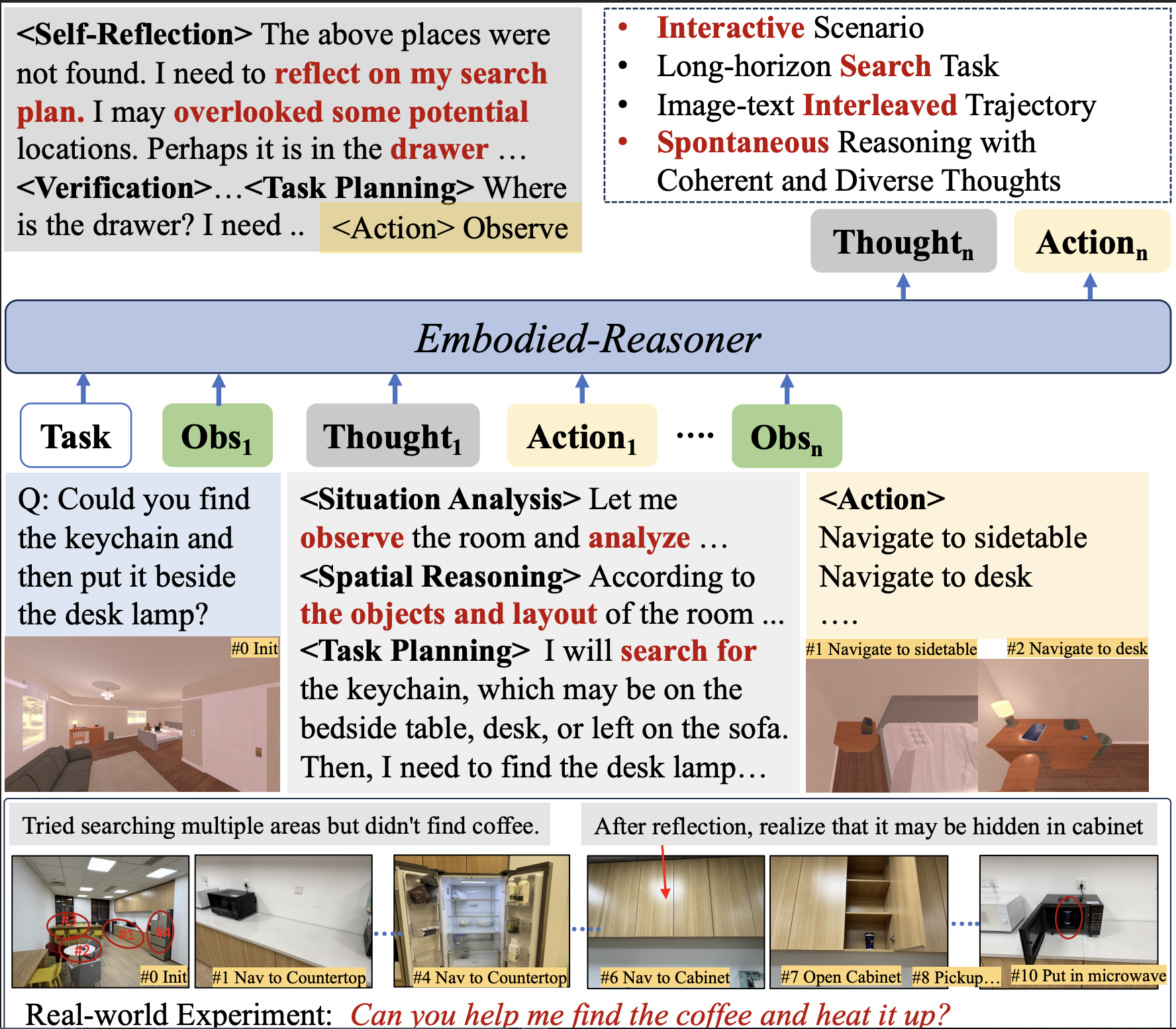
- System 2 (Reasoning and Task Anchoring): Processes language instructions, visual observations, and robot state to understand tasks.
- System 1 (Whole-Body Motion and Stabilization): Converts latent representations into stable whole-body behavior, coordinating locomotion, torso movement, posture, balance, and arm reach.
- System 0 (Dexterous Physical Interaction): Controls a 21-DOF dexterous hand for grasping, pinching, and adjusting, always coordinated with System 1.
HumanEx Data Collection System
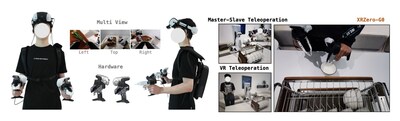
The HumanEx wearable exoskeleton system comprises Head Module (binocular RGB, 6-axis IMU at 60fps), Dexterous Hand Module (joint encoders, force sensors), and Whole-body Exoskeleton Module (multi-modal sensors). It has accumulated 21,000 hours of human behavior data, including 2,800 hours of whole-body coordination demonstrations.
Real-World Validation
Curr-0 demonstrated capabilities across five contact-intensive tasks: tearing open teabags (asymmetric bimanual coordination), handling paperwork (stamping), lighting incense sticks (multi-step execution), cleaning table trash (integrated mobility and manipulation), and organizing objects through doorframes.
Significance: Curr-0 represents a shift from the industry-standard mobile base plus arms paradigm toward true whole-body intelligence, increasingly recognized as essential for humanoid robots in human environments.