Introduction: The US Embodied AI Landscape in 2026
The United States remains the world most dynamic market for embodied AI innovation, hosting a diverse ecosystem spanning automotive giants, AI research leaders, robotics pioneers, and a new generation of well-funded startups. In 2026, US embodied AI companies have collectively raised over $15 billion in venture funding, deployed thousands of humanoid and general-purpose robots in commercial settings, and established critical infrastructure components that power the entire industry. This comprehensive tracker profiles the key players shaping the American embodied AI landscape.
As previously reported by Embodied Global, the physical AI market has crossed $13 billion globally (covered here), with US companies capturing approximately 40% of this market. This growth represents what NVIDIA CEO Jensen Huang has called the ChatGPT moment for physical AI.
Tesla / Optimus
Founded: 2003 (Optimus program: 2022)
Funding: Public company (NASDAQ: TSLA). Market cap about $580 billion. Optimus development funded through corporate R&D budget estimated at $2-3 billion cumulatively.
Technology: Tesla Optimus Gen 3 features a 28-degree-of-freedom bipedal humanoid platform standing 1.75m tall, weighing 68kg, with a 25kg lifting capacity. Powered by Tesla custom-designed actuator suite (12 linear + 18 rotary actuators) and the Dojo supercomputer for training. The robot uses Tesla Full Self-Driving (FSD) computer and camera-based perception system adapted from the automotive platform.
Commercial Deployment: As of June 2026, Tesla has deployed approximately 1,000 Optimus units at Giga Texas factory, performing battery cell handling, component sorting, and general material movement. The robots operate in supervised autonomy mode with human operators monitoring 10:1 robot-to-human ratios. Tesla CEO Elon Musk has stated targets of 5,000 units deployed internally by end of 2026, with external commercial sales beginning in Q1 2027.
Differentiator: Vertical integration Tesla designs and manufactures its own actuators, batteries, compute hardware, and AI models in-house. The FSD computer and Dojo training infrastructure provide a proprietary compute stack unmatched in the humanoid industry.
OpenAI
Founded: 2015
Funding: Public/private hybrid. Most recent valuation about $300 billion (2026).
Embodied AI Strategy: OpenAI has pursued a multi-pronged approach to embodied AI. The company leads the $6.7 billion investment in Figure AI (as of May 2026), providing both capital and AI research partnership. OpenAI GPT-5.4 model serves as the cognitive backbone for Figure humanoid robot. Separately, OpenAI has established an internal robotics team with 200+ researchers focused on developing a general-purpose robot foundation model, codenamed Project Atlas.
Key Developments: In February 2026, OpenAI demonstrated its universal manipulation policy on a diverse set of 50+ manipulation tasks with 91% task success rate, though this has not yet been deployed on a commercial robot platform. OpenAI has also invested in several robotics startups through its OpenAI Startup Fund, including Physical Intelligence and Covariant.
Differentiator: Frontier AI models OpenAI advanced LLM capabilities provide unrivaled reasoning and task planning capabilities for embodied AI systems. However, the company has not yet committed to manufacturing its own hardware, relying on partnerships for physical deployment.
Figure AI
Founded: 2022
Funding: Total raised about $8.5 billion. Key investors: OpenAI (lead), Microsoft, NVIDIA, Jeff Bezos (via Bezos Expeditions), Parkway Venture Capital.
Technology: Figure 03 humanoid robot (June 2026) 1.7m, 65kg, 22kg payload. Features Figure proprietary F.02 actuator series with integrated sensing and force control. The robot runs Figure on-device AI stack powered by OpenAI GPT-5.4 for high-level reasoning with a Figure-designed motion controller for low-level motor control.
Commercial Deployment: Figure has deployed 200+ units across BMW manufacturing facilities (Spartanburg, SC), Amazon fulfillment centers, and construction partner sites. The company targets 2,000 units deployed by end of 2027. Commercial pricing starts at $89,000 per unit with $36,000/year service contract.
Differentiator: AI-native design Figure robots are designed from the ground up around AI capabilities, with GPT-5.4 integration enabling natural language task instruction, real-time error recovery, and continuous learning from human feedback.
Apptronik
Founded: 2016 (spun out of University of Texas at Austin Human Centered Robotics Lab)
Funding: $935 million Series A (March 2026) one of the largest single funding rounds in robotics history. Backed by Ark Investment Management, Samsung Catalyst Fund, and GMR Capital.
Technology: Apollo humanoid robot 1.72m, 73kg, 25kg payload. Features proprietary series elastic actuators for safe human-robot interaction. Modular design allows swapping of end-effectors and sensor packages for different task domains.
Commercial Deployment: Apollo is in pilot testing with 15 enterprise customers including Mercedes-Benz (logistics), FedEx (package handling), and Walmart (warehouse operations). General commercial availability expected Q3 2026.
Differentiator: Safety-first modular design. Series elastic actuators provide inherent compliance, making Apollo suitable for collaborative environments. The modular architecture allows customers to customize robots for specific verticals.
Boston Dynamics
Founded: 1992. Acquired by Hyundai Motor Group (2021).
Funding: Hyundai acquired the company for $1.1 billion. Post-acquisition R&D investment estimated at $500 million to date.
Technology: Atlas (production version) unveiled at CES 2026 standing 1.9m, weighing 90kg, with 56 degrees of freedom and 50kg lifting capacity. Features 4-hour battery life with 3-minute autonomous battery swapping, aluminum-titanium alloy construction, and fully rotational joints. As covered by Embodied Global (read more), Atlas has transitioned from research platform to commercial product.
Commercial Deployment: Atlas production units deployed for industrial inspection and hazardous environment operations. Spot (quadruped) has achieved broader commercial adoption with 2,500+ units deployed for industrial inspection, security patrol, and construction site monitoring.
Differentiator: Decades of advanced robotics R&D, best-in-class bipedal locomotion and manipulation. Hyundai Motor Group integration provides manufacturing scale and automotive industry customer access.
Standard Bots
Founded: 2019
Funding: $200 million Series C (April 2026). Backed by General Catalyst, Amazon Industrial Innovation Fund.
Technology: RO1 collaborative robot arm 6-axis, 18kg payload, with integrated AI task planning. Launched Embodied AI Studio platform enabling rapid deployment through natural language programming and zero-shot task acquisition.
Commercial Deployment: 1,200+ RO1 units deployed across SMB manufacturing, laboratory automation, and light industrial settings. Pricing starts at $24,000 for the base unit, making it accessible for small and medium businesses.
Differentiator: Affordability and ease of deployment. Standard Bots targets the SMB market with robots that require no specialized programming skills, democratizing access to embodied AI technology.
Physical Intelligence
Founded: 2024
Funding: Total raised about $750 million. Valuation has doubled to $2.4 billion following their November 2025 technology demonstration. Backed by OpenAI, Sequoia Capital, Lux Capital.
Technology: Universal manipulation AI develops foundational AI models for general-purpose robot control, not specific hardware. Their pi-zero model demonstrated broad manipulation capabilities across multiple robot platforms including Franka, KUKA, and custom hardware.
Commercial Deployment: pi-zero model is available via API, licensed to 30+ robotics companies for integration into their platforms. Enterprise licensing at $500,000/year per fleet.
Differentiator: Hardware-agnostic AI model Physical Intelligence approach decouples AI from hardware, enabling any compliant robot platform to access advanced manipulation capabilities without developing in-house AI expertise.
NVIDIA
Founded: 1993
Market Cap: About $4.2 trillion (June 2026)
Embodied AI Infrastructure: NVIDIA provides the essential computing infrastructure for embodied AI through three key pillars: (1) Jetson AGX Orin/Thor edge computing modules powering on-robot AI inference; (2) Omniverse/Isaac Sim simulation and synthetic data generation platform used by 85% of embodied AI companies for training and testing; (3) H200/B200 GPUs training infrastructure for VLA models, with B200 offering 4x performance over previous generation.
Key Developments: At GTC 2026, NVIDIA announced the Embodied AI Blueprint a reference architecture combining Omniverse simulation, Isaac manipulation skills, and Jetson edge deployment. Over 150,000 registered developers on the Isaac platform.
Differentiator: Infrastructure monopoly-like position nearly every embodied AI company depends on NVIDIA hardware for either training, simulation, or deployment, making NVIDIA the indispensable infrastructure layer of the industry.
Meta
Founded: 2004
Embodied AI Strategy: Meta significantly accelerated its embodied AI efforts in 2026, most notably with the acquisition of Assured Robot Intelligence, a stealth-mode robotics AI startup founded by former Carnegie Mellon researchers. The acquisition, valued at approximately $650 million, brings expertise in simulation-to-real transfer and generalized manipulation controllers.
Meta FAIR (Fundamental AI Research) lab has published several open-source embodied AI benchmarks and models, including the Habitat 3.0 simulation platform used widely for embodied AI research. Meta long-term strategy appears focused on AI research contributions and potential AR/VR interaction paradigms, rather than direct robot hardware manufacturing.
Differentiator: Open research contributions and simulation infrastructure. Habitat 3.0 and Open Materials are widely used in the embodied AI research community, establishing Meta as a key research ecosystem contributor.
Amazon
Founded: 1994
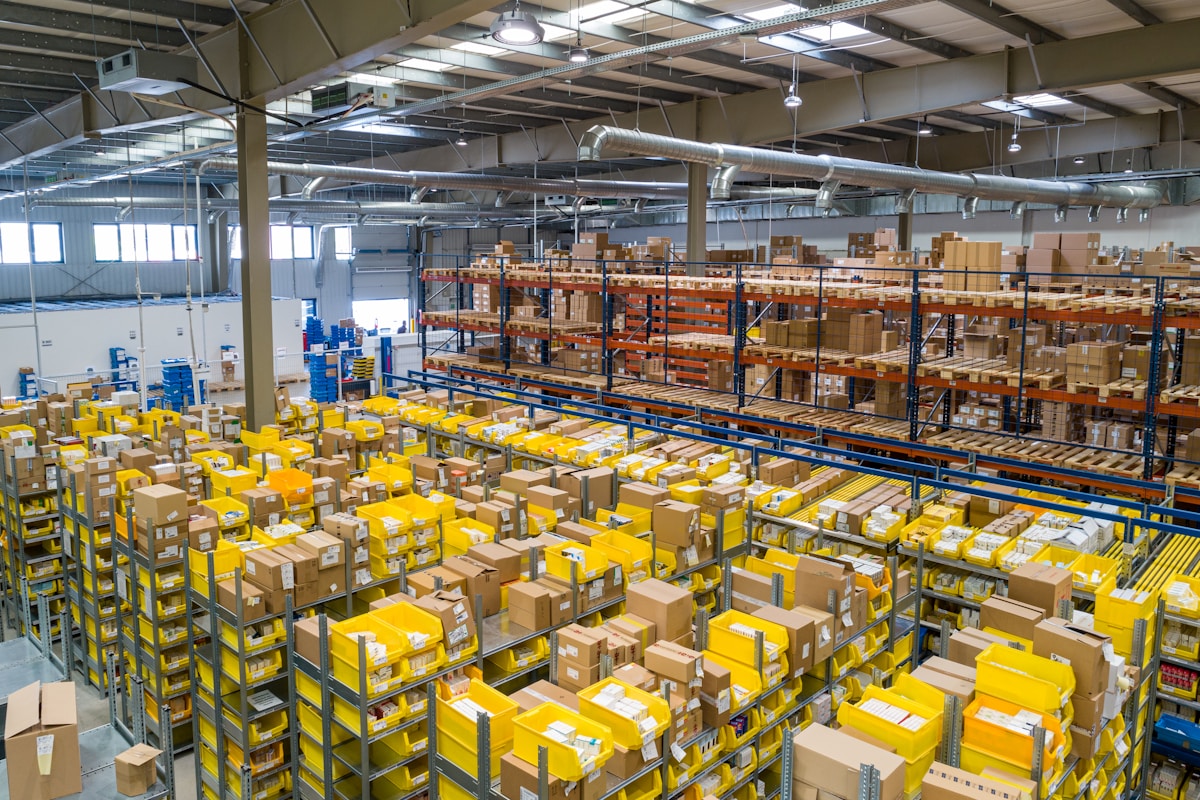
Embodied AI Strategy: Amazon has pursued embodied AI through multiple channels. The company $1.3 billion investment in Neurala (announced January 2026) provides AI brain technology for its warehouse robot fleet. Amazon has also invested in Agility Robotics ($350 million) for Digit bipedal warehouse robots, with 500+ Digits deployed across Amazon fulfillment centers sorting packages and restocking inventory.
Amazon Industrial Innovation Fund has made 15+ investments in embodied AI and robotic startups, positioning Amazon as both a major customer and strategic investor across the ecosystem.
Differentiator: Scale of deployment and use-case focus. Amazon warehouse operations provide the world largest real-world testing ground for embodied AI at scale, driving practical innovation in logistics robotics.
Funding and Market Overview
The US embodied AI sector has seen unprecedented funding activity in 2026. Key funding rounds include:
- Apptronik: $935M Series A (largest single robotics round)
- Figure AI: $6.7B cumulative (OpenAI-led)
- Standard Bots: $200M Series C
- Physical Intelligence: $750M cumulative
- Neurala: $1.3B (Amazon-led)
- Agility Robotics: $350M cumulative
Total US embodied AI venture funding in H1 2026 exceeded $9.2 billion, on track to surpass $18 billion for the full year. This represents a 340% increase over 2025 levels.
Conclusion
The US embodied AI landscape in 2026 is characterized by deep-pocketed competition across multiple technology approaches and market segments. Tesla pursues vertical integration with manufacturing scale; OpenAI and Figure combine frontier AI with hardware innovation; Boston Dynamics leverages decades of R&D expertise; Apptronik and Standard Bots target specific market segments with modular designs; Physical Intelligence pioneers a hardware-agnostic AI-first approach; and NVIDIA, Meta, and Amazon provide critical infrastructure, research, and deployment platforms. This diversity of approaches, backed by unprecedented funding, positions the US to maintain leadership in core AI and software innovation for embodied intelligence, even as China leads in policy-driven industrial deployment and standardization.