A Robot Built for Space-First Functionality
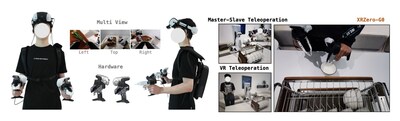
Meet Helios, a four-armed humanoid from Swiss startup Orbit Robotics built for the hand-over-hand realities of microgravity. With no legs and 28 degrees of freedom, it clings, steadies, and still keeps spare limbs for wrench work and cargo unloading on space stations.
The goal is pragmatic: handle maintenance and transport tasks autonomously or by remote control, so astronauts can focus on science. If it delivers, every hour it works could offset the roughly $140,000 price tag of astronaut labor.
Designed for Zero Gravity
Every so often, a design choice feels obvious once you see it. Orbit Robotics, a Swiss startup, has introduced Helios, a humanoid robot tailored for microgravity. No legs, four arms, station-ready. It is built for life inside orbital habitats — the kind NASA and its partners keep supplied and running.
Helios stands apart by treating zero gravity as the default, not an afterthought. In place of walking, it moves hand over hand, anchoring to rails and bulkheads while freeing two arms for the task at hand. The company positions it as an assistant for repetitive jobs that consume astronauts' hours yet rarely require a human's judgment.
Founded in late 2025 out of a Swiss research ecosystem, Orbit Robotics spent its first months building for one environment: space stations. The team publicly introduced Helios in a video released on May 20, 2026.
Technical Specifications
- Height: 5.2 feet (160 cm)
- Weight: 70 pounds (32 kg)
- Materials: Aluminum alloy and carbon fiber
- Degrees of freedom: 28 (including 14 in dexterous hands)
- Power: Electric actuators with tendon-based transmissions
- Runtime: 3 hours per charge
- Transit speed: Up to 1.2 mph (2 km/h)
- Operation: Autonomous for routines, remote control for complex procedures
Economic Case for Space Robotics
Astronaut time is scarce and expensive. By some estimates, it runs about $140,000 per hour. Helios is built to shoulder routine chores — cargo transfers, filter swaps, inspections — so crews can focus on research and mission-critical work.
As commercial stations and lunar infrastructure plans advance, tools that turn checklists into background tasks could shape costs and schedules. The company is positioning Helios not as a sci-fi helper, but as a practical co-worker tuned for orbit's everyday jobs.