NVIDIA published the first scaling law for robot dexterity this week. The finding came with GR00T N1.7, released June 9 with a full Apache 2.0 license: going from 1,000 to 20,000 hours of real-world video training data doubles manipulation success rates.
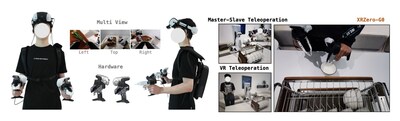
The model is 3 billion parameters, trained on the EgoScale dataset of 20,854 hours of egocentric video, and it does not require thousands of hours of costly teleoperation. This means labs can now plan data collection roadmaps with confidence rather than guessing.
In machine learning, a scaling law means more data and compute produce predictably better results. This is the reason every major AI lab now races to build larger datasets rather than better architectures. Physical AI now follows the same rules.
"This one result changes the trajectory of the entire field," the analysis noted. "Physical AI no longer has to hope that more data helps. Now it knows by how much."
The Apache 2.0 license means any company or researcher can use, modify, and deploy GR00T N1.7 commercially without restriction, potentially accelerating the entire robotics industry.