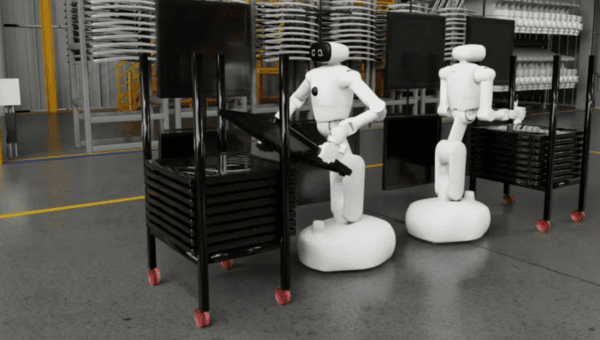
China has taken its most decisive step yet toward operationalizing humanoid robots at scale. On June 8, 2026, the Ministry of Industry and Information Technology (MIIT) and the State-owned Assets Supervision and Administration Commission (SASAC) jointly issued the 2026 Humanoid Robot and Embodied AI Real-Scenario Training Action Plan (Document No. 工信厅联科函〔2026〕256号), establishing a national framework to move humanoid robots from laboratory demonstrations into real-world production environments.
The Policy Signal: From Performance Mode to Operation Mode
The document's language is striking in its specificity. Rather than aspirational targets, this action plan sets concrete deliverables:
- 100+ high-value application scenarios validated by year-end 2026
- 10,000-unit scale deployment capability across industrial, service, and special operations
- Real-scenario training spaces in 10 provinces (Beijing, Tianjin, Shanghai, Jiangsu, Zhejiang, Shandong, Hubei, Hunan, Guangdong, Sichuan) and central SOEs
- Provinces must submit 20+ scenario units; SOEs must submit 10+ scenarios
The plan explicitly declares that humanoid robots will complete application verification and regular deployment in representative scenarios, entering operation mode (作业模式)—a deliberate contrast with the performance mode (功夫模式) of stage demonstrations.
Six Pillars of the Action Plan
1. Real-Scenario Training Spaces
The plan mandates training environments in actual production facilities—not simulated labs. Key areas include manufacturing, inspection, maintenance, warehousing, food service, healthcare, emergency response, and disaster relief. The principle is minimal intervention, reuse existing infrastructure.
2. Innovation Application Consortiums
Each scenario must form a consortium linking user companies (providing space and requirements), robot manufacturers (developing solutions), supply chain partners (components and algorithms), and research institutions. User companies quantify deployment targets; manufacturers adapt to real operational requirements.
3. Practical Operation Skills Development
This is the plan's technical core:
- Embodied AI foundation models and motion control algorithms optimized for real scenarios
- High-fidelity datasets capturing full-body motion trajectories, force control curves, and execution sequences
- Edge-cloud collaboration and offline autonomy deployment modes
- Safety systems: collision detection, force limiting, emergency braking, and black box recording
4. Verification and Regular Deployment
Structured evaluation: user companies or third parties develop test protocols, evaluate real-world task success rates, efficiency improvements, safety reliability, and economic feasibility. Verified solutions expand to similar scenarios—verify one, deploy a batch, catalyze a sector.
5. Key Element Guarantees
- Participation in MIIT's Humanoid Robot and Embodied AI Standardization Technical Committee
- Identity management for each robot unit (full lifecycle management)
- Multi-path financing including equity, debt, and insurance instruments
- Exploration of Humanoid Robot as a Service (HRaaS) models with usage-based pricing and operational leasing
6. Experience Distillation and Replication
Successful pilots documented as replicable guides covering scenario modification, environment adaptation, deployment verification, and daily operations—enabling cross-regional and cross-industry scaling.
Strategic Significance
This action plan represents a paradigm shift in China's humanoid robot strategy. Three elements distinguish it:
First, demand-side coordination. By requiring SOEs to open real scenarios and quantify deployment targets, the government creates a structured demand pipeline rather than relying on organic market adoption.
Second, the data flywheel. The emphasis on high-fidelity real-world datasets addresses the critical bottleneck in embodied AI development—lab data does not transfer to real environments. The specification for spatial semantics, object properties, abnormal handling, and boundary conditions data represents the most detailed government specification of embodied AI data requirements to date.
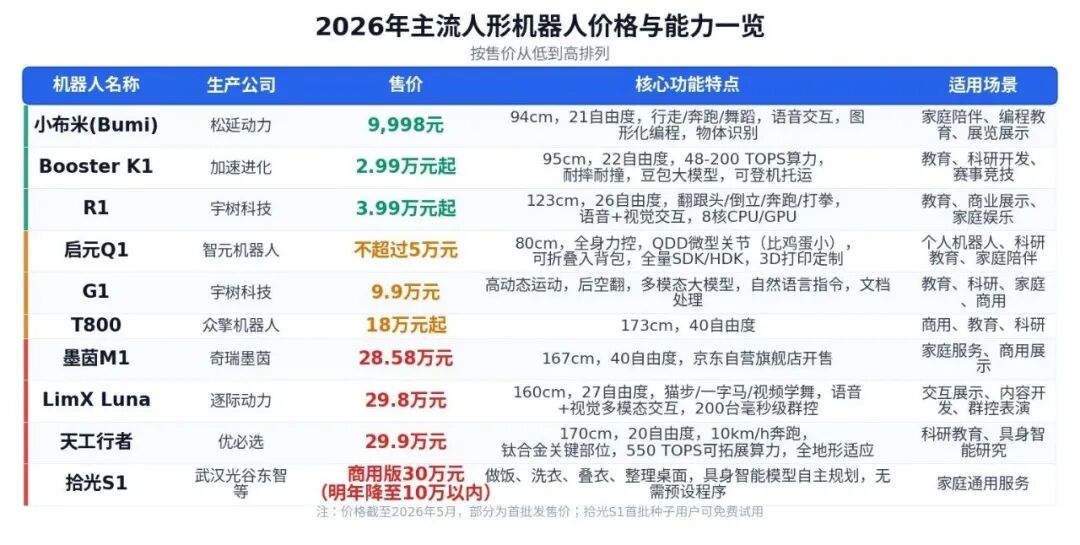
Third, the HRaaS business model. By explicitly endorsing usage-based pricing and operational leasing, the government acknowledges that current cost structures remain prohibitive and service-based models are necessary for market adoption.
Implications for the Global Industry
China's approach contrasts sharply with the U.S. strategy of export controls and safety regulations. Where the U.S. is building walls, China is building bridges between government demand and commercial supply. The 10-province, multi-SOE scope means this is not a pilot—it is a structured rollout.
For international competitors, the signal is clear: China intends to achieve operational deployment at scale before the rest of the world resolves the sim-to-real gap. Whether this top-down approach can outperform the bottom-up innovation of U.S. and European companies remains the defining question of the humanoid robot race.
Source: MIIT Official Notice (https://www.miit.gov.cn/jgsj/kjs/wjfb/art/2026/art_cd666691abf8471fb8553d463aa416e3.html) | Document No. 工信厅联科函〔2026〕256号 | Published 2026-06-08