On June 12, 2026, at the 8th BAAI Conference in Beijing, BAAI (Beijing Academy of Artificial Intelligence) Director Wang Zhongyuan unveiled Physis-v0.1, the world's first general world foundation model.
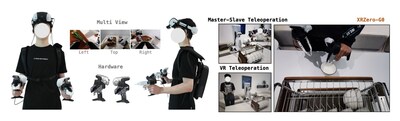
Unlike traditional large language models or multimodal models that simply scale parameters, Physis-v0.1 is a unified framework integrating perception, simulation, and control. It establishes continuous mappings between physical space and action atoms, predicting the next physical state from multimodal inputs including video, RGB-D, 3D point clouds, and force-tactile feedback.
The model features four core capabilities: physical correctness (ensuring predictions adhere to physical laws), causal traceability (linking actions to their consequences), long-range consistency (maintaining coherence over extended sequences), and universal generalization (adapting across diverse scenarios).
Physis-v0.1 supports over 50 complex physical scenarios for long-range reasoning and generalization. It can be adapted to robotics, video generation, gaming, industrial simulation, and other real-world physical application domains, providing foundational support for embodied intelligence and serious industrial use cases.
Wang Zhongyuan emphasized that Physis-v0.1 represents a paradigm shift from "language models that talk about the world" to "world models that understand and predict the physical world." The model enables an end-to-end pipeline of "seeing — understanding — taking action" that can be reused across different embodiments and scenarios.
Alongside Physis-v0.1, BAAI also released the RoboBrain Orca-v0 world model, which adopts a "next state prediction" paradigm rather than traditional next token/frame/action prediction, moving toward human-like cognition with unified physical state representations.
The release signals China's accelerating ambition in the world model race, positioning BAAI alongside global players like NVIDIA (Cosmos), Google DeepMind, and others competing to build the foundational intelligence layer for physical AI.