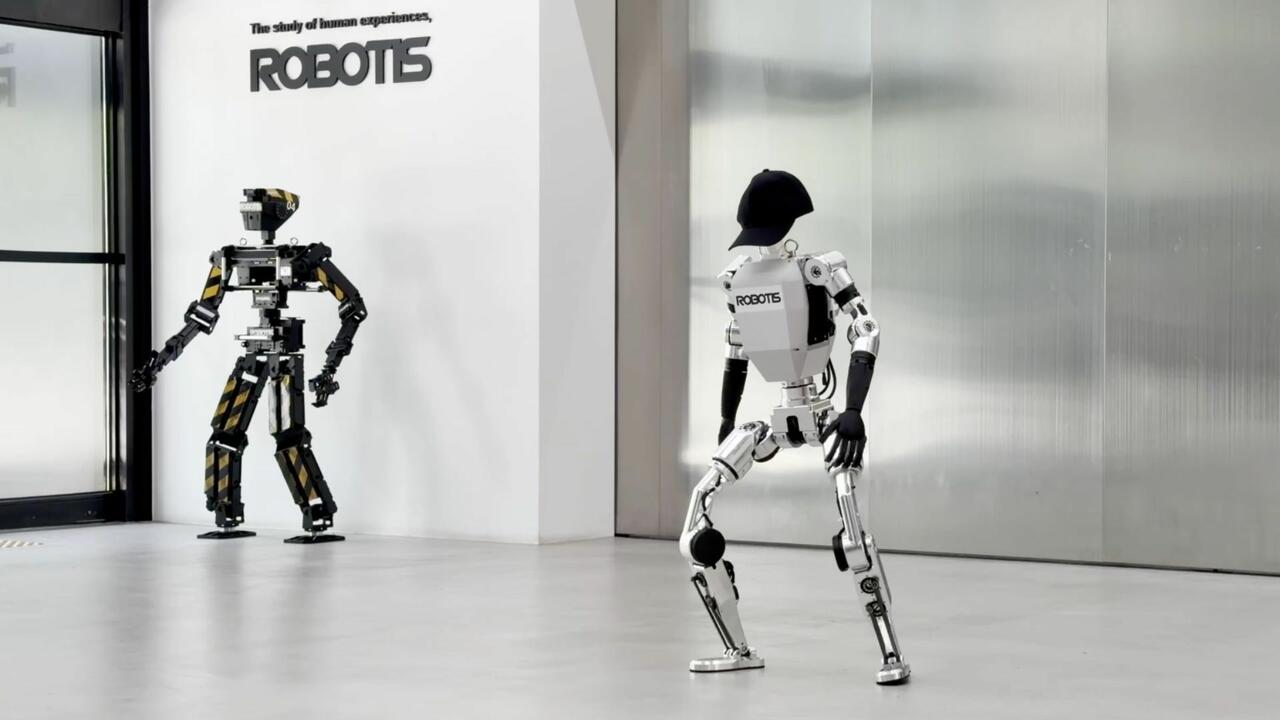
Zhiyuan Robotics has achieved a major breakthrough in embodied intelligence. On June 15, 2026, the company's Expedition A3 humanoid robot successfully played autonomous ping-pong, becoming the world's first full-size bipedal humanoid robot to complete a table tennis rally through fully autonomous decision-making — with no remote control, no pre-scripted routines, and no human intervention.
The Challenge of Table Tennis for Humanoid Robots
Table tennis presents one of the most demanding real-time challenges for embodied AI. Ball speeds exceed 5 meters per second, with constantly changing spin, landing points, and trajectories. The Expedition A3 must execute a complete closed-loop control sequence: visual perception, trajectory prediction, full-body motion planning, and precision striking — all in milliseconds.
To meet this challenge, Zhiyuan partnered with Professor Zhang Shanghang's team at Peking University to develop SpikePingpong, the world's first humanoid robot table tennis motion control algorithm. The system leverages a 20kHz high-frequency pulse camera developed by Professor Huang Tiejun's team at Peking University, delivering visual response speeds 10 times faster than conventional solutions. This enables millimeter-level prediction of paddle contact points, dramatically improving motion control precision.
Technical Architecture
The Expedition A3's ping-pong capability is built on three key technological pillars:
-
SpikePingpong Algorithm: A dedicated motion control algorithm optimized for the millisecond-level response requirements of table tennis. The algorithm handles real-time ball tracking, trajectory prediction, and full-body kinematic planning.
-
20kHz High-Frequency Pulse Camera: Developed by PKU's Huang Tiejun team, this camera technology captures visual information at 20,000 frames per second, providing 10x faster visual response compared to conventional camera systems. This allows the robot to track the ball's position, spin, and trajectory with exceptional precision.
-
Full-Body Motion Planning: The Expedition A3 coordinates its bipedal stance, torso rotation, arm trajectory, and wrist angle in a unified motion plan, enabling natural and effective striking motions.
Industry Implications
This achievement marks a significant step forward for humanoid robotics. While robots have demonstrated impressive capabilities in controlled environments — from backflips to complex manipulation — autonomous ping-pong represents a real-time dynamic interaction challenge that requires rapid perception-action loops operating at human-comparable speeds.
The collaboration between Zhiyuan and Peking University researchers also highlights the growing trend of industry-academia partnerships in embodied AI, combining cutting-edge research with commercial product development.
Source: Shanghai Securities News