A significant paradigm shift is underway in embodied AI. World-Action Models (WAMs) — which leverage pretrained video and world-model backbones to predict both future world states and robot actions — are rapidly emerging as a powerful alternative to the dominant VLA approach, according to a technical analysis published by NVIDIA on June 15, 2026.
What Are WAMs?
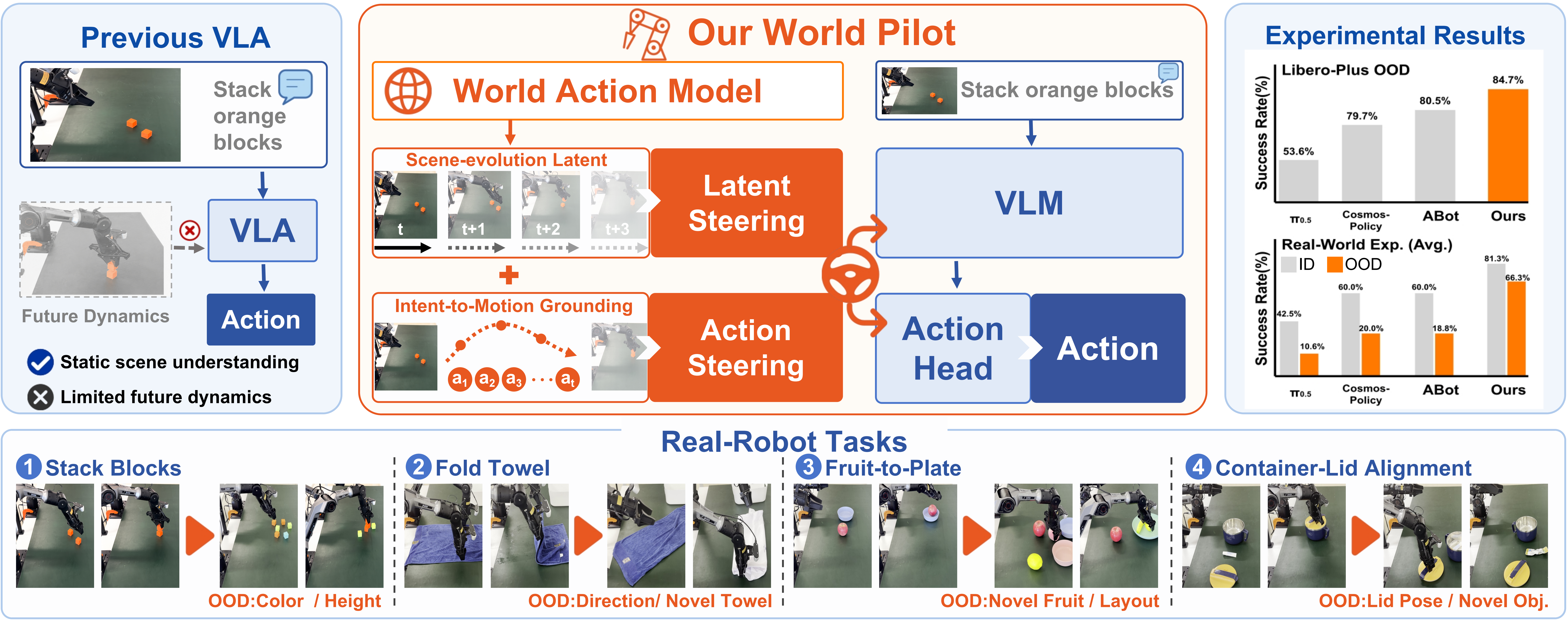
Unlike VLA models that directly map visual perception and language to robot actions, WAMs start from a pretrained world-model backbone and learn to predict how scenes change over time while emitting actions. This embeds physical world understanding directly into policy learning.
Efficiency Advantage
Kairos-4B (ACE ROBOTICS) achieved first place on WorldModelBench Robot with 4 billion parameters, outperforming models 4-7x its size. NVIDIA's Cosmos 3.0 has adopted a similar unified architecture, validating the approach Kairos pioneered.
Benchmark Results
Kairos achieved 89.0 on LIBERO-Plus (surpassing ACoT-VLA 88.0), 9.30 on WorldModelBench Robot, 96.1% SOTA on RoboTwin 2.0, and led DreamGen for synthetic data transfer. By combining world model prediction with robot action policies, WAMs offer a more scalable path toward general-purpose embodied intelligence.
Industry Impact
The shift toward WAMs represents a fundamental change in robot learning — one that could accelerate deployment of capable, safe robots across manufacturing, logistics, healthcare, and domestic settings.