What is Embodied AI? A Complete Beginner's Guide 2026
Introduction
Artificial intelligence has entered a new era. While chatbots like ChatGPT and image generators like Midjourney have captured the public imagination, a quieter but potentially more profound revolution is underway — one that moves AI from the digital realm into the physical world. This is the domain of Embodied AI.
In 2026, embodied AI has transitioned from academic research labs into commercial deployment. Humanoid robots are working on factory assembly lines, autonomous mobile robots are navigating warehouses, and AI-powered systems are beginning to understand and interact with the physical world in ways that were science fiction just a few years ago.
But what exactly is embodied AI? How does it differ from the AI systems most people are familiar with? And why does 2026 represent such a pivotal moment for this technology?
This comprehensive beginner's guide answers all these questions and more.
1. What is Embodied AI?
Definition
Embodied AI (also called Physical AI or Embodied Intelligence) refers to artificial intelligence systems that have a physical body — typically a robot — through which they perceive, reason about, and act upon the real world. Unlike purely software-based AI that operates in digital spaces, embodied AI must contend with the full complexity of physical reality: gravity, friction, object physics, dynamic environments, and the need for real-time sensorimotor coordination.
As defined by NVIDIA, embodied AI is "the integration of artificial intelligence into physical systems, enabling them to interact with the physical world." These systems include general-purpose robots, humanoid robots, autonomous vehicles, and even smart factories and warehouses.
The core idea draws from cognitive science: intelligence doesn't exist solely in the brain — it emerges from the interaction between a body and its environment. This concept, pioneered by roboticist Rodney Brooks in the 1990s, argues that true intelligence requires physical embodiment to develop common-sense understanding of how the world works.
Embodied AI vs. Traditional AI
The fundamental difference between embodied AI and traditional (disembodied) AI lies in what they output and how they interact with the world:
| Aspect | Traditional AI (LLMs, Image Gen) | Embodied AI |
|---|---|---|
| Output | Text, images, audio | Joint torques, motor commands |
| Environment | Digital space | Physical world with real physics |
| Feedback | Text evaluation, RLHF | Real-time sensor signals |
| Failure cost | Incorrect information | Physical damage, safety risks |
| Evaluation | Accuracy, BLEU scores | Success rate, uptime, MTBF |
A large language model (LLM) like ChatGPT can write a poem about making coffee, but it has no idea how to actually pick up a coffee cup, navigate to a coffee machine, press the right buttons, and pour the coffee without spilling it. An embodied AI system must do all of these things in real-time, in a world governed by physics, with consequences for every action.
Why 2026 is a Watershed Year
Several factors have converged to make 2026 the year embodied AI truly arrives:
- Foundation models for robotics: Vision-Language-Action (VLA) models have solved the generalization problem that plagued robotics for decades
- Commercial deployment: Companies like Figure AI, Tesla, and Agility have moved from demos to real production lines
- Manufacturing scale: Production costs are dropping rapidly, with humanoids targeting price points below $30,000
- Investment surge: The global embodied AI market is projected to grow from $4.44 billion in 2025 to $23.06 billion by 2030 (CAGR of 39%)
NVIDIA declared 2025 as "Physical AI Year One," and 2026 is where the promised commercial reality begins to materialize.
2. The Core Components: Perception → Cognition → Action
Embodied AI systems operate through a continuous three-stage loop that mimics how biological organisms interact with the world:
Perception
Perception is how the system gathers information about its environment. This involves multiple sensor modalities:
- Computer vision: Cameras provide visual data for object recognition, scene understanding, navigation, and human interaction
- LiDAR and depth sensors: Create 3D maps of the environment for spatial awareness
- Force and tactile sensors: Provide feedback about touch, pressure, and texture
- Microphones: Enable speech recognition and sound localization
- IMUs and proprioception sensors: Track the robot's own body position, orientation, and movement
Modern embodied AI systems fuse all these sensor inputs into a coherent understanding of the environment, often in real-time.
Cognition
Cognition is the processing and decision-making layer. This is where AI models interpret perceptions, reason about goals, and plan actions. Key cognitive capabilities include:
- Scene understanding: Recognizing objects, their properties, spatial relationships, and functional affordances
- Task planning: Breaking down high-level goals (e.g., "clean the kitchen") into sequences of low-level actions
- Natural language understanding: Interpreting human instructions and responding appropriately
- World modeling: Building and maintaining an internal model of the environment that can predict the outcomes of actions
- Reasoning under uncertainty: Making decisions despite noisy sensors and unpredictable environments
In 2026, this cognitive layer is increasingly powered by large multimodal models like VLMs (Vision-Language Models) and LLMs that can reason about complex, open-ended situations.
Action
Action is where decisions become physical reality. This includes:
- Motion planning: Computing collision-free trajectories for the robot's limbs
- Locomotion control: Walking, running, climbing stairs, maintaining balance
- Manipulation: Grasping, pushing, pulling, rotating, assembling objects
- Force control: Applying the right amount of force for tasks like handling fragile objects
- Compliant interaction: Safe physical interaction with humans and the environment
This perception-cognition-action loop runs continuously, at frequencies ranging from milliseconds for low-level motor control to seconds for high-level task planning.
3. Key Technologies Powering Embodied AI
Sim-to-Real Transfer
Sim-to-Real (Sim2Real) is the practice of training AI models in simulation and then deploying them in the real world. This is crucial because:
- Safety: Training in simulation avoids physical damage during early learning
- Scale: Millions of training scenarios can be run in parallel in simulation
- Edge cases: Rare or dangerous situations can be safely simulated
- Cost: Simulation is dramatically cheaper than real-world robot time
NVIDIA Isaac Sim, MuJoCo, and PyBullet are among the leading simulation platforms used for embodied AI training. The key challenge — bridging the "sim-to-real gap" — involves making simulations realistic enough that policies trained in sim transfer successfully to the real world. Techniques like domain randomization (varying lighting, textures, physics parameters) help close this gap.
Vision-Language-Action (VLA) Models
VLA models represent the most significant breakthrough in embodied AI in recent years. These models integrate visual perception (vision), semantic understanding (language), and motor control (action) into a single unified architecture.
Notable VLA models in 2026 include:
- Google DeepMind Gemini Robotics 1.5: A VLA model that can "see, understand, and act" across different robot embodiments
- Figure AI Helix: Figure's in-house VLA model that powers the Figure 03 humanoid
- NVIDIA GR00T N1: A foundation model for general-purpose humanoid robots
- RT-2 and RT-X: Google's earlier pioneering VLA models
- Star Movement ERA-42: An end-to-end VLA model from Chinese company Star Movement
VLA models are transformative because they enable robots to:
- Follow natural language instructions directly
- Generalize to novel objects and scenarios they've never seen
- Learn new tasks from just a few demonstrations
- Transfer skills between different robot platforms
Reinforcement Learning (RL)
Reinforcement learning trains embodied AI systems through trial and error. The system takes actions, receives rewards or penalties, and learns to maximize cumulative reward over time.
RL has been particularly successful for:
- Locomotion: Teaching robots to walk, run, and recover from falls
- Manipulation: Learning dexterous hand movements
- Navigation: Finding optimal paths in complex environments
A key advantage of RL is that it can discover strategies that human engineers would never think to program. Boston Dynamics' Atlas uses RL extensively for its fluid, athletic movements. When combined with simulation, RL can run millions of training episodes equivalent to years of real-world experience in just hours.
Imitation Learning
Imitation learning (also called learning from demonstration) allows robots to acquire skills by observing and mimicking human demonstrations. This is much faster than RL for complex tasks because the robot starts with good examples rather than random exploration.
Modern approaches include:
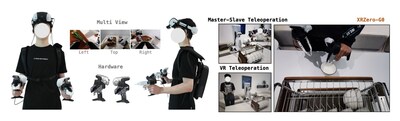
- Teleoperation: Humans remotely control the robot to demonstrate tasks
- Behavioral cloning: The robot learns a direct mapping from observations to actions
- Inverse reinforcement learning: The robot infers the underlying reward function from demonstrations
Imitation learning has proven especially valuable for fine manipulation tasks like assembly, surgery, and delicate object handling. Figure AI's robots, for instance, learned many of their manufacturing skills through human teleoperation demonstrations.
World Models
World models are neural networks that learn to simulate the physical world. They predict how the environment will evolve in response to actions, enabling robots to "imagine" the consequences of their actions before executing them.
This capability provides several advantages:
- Planning: The robot can mentally simulate multiple action sequences and choose the best one
- Safety: Dangerous actions can be identified and avoided before execution
- Efficiency: The robot can learn from imagined experience, reducing the need for real-world data
Companies like World Labs (founded by Fei-Fei Li) and Star Diagram (Chinese startup specializing in world models) are pushing the boundaries of what world models can achieve for embodied AI.
4. Major Application Scenarios
Manufacturing
Manufacturing is the leading application for embodied AI in 2026. Humanoid robots are being deployed for:
- Assembly: Precision assembly of components in automotive, electronics, and aerospace manufacturing
- Material handling: Moving parts, tools, and assemblies between workstations
- Quality inspection: Visual and tactile inspection for defects
- Dangerous tasks: Handling hazardous materials, working in extreme temperatures
Figure AI's Figure 02/03 robots have been deployed at BMW's Spartanburg assembly plant since 2024, handling sheet metal and supporting the assembly of over 30,000 vehicles. Tesla Optimus is working inside Tesla's Fremont and Shanghai factories. Agility's Digit handles logistics tasks in manufacturing environments.
Logistics and Warehousing
Warehouses are natural environments for embodied AI due to their structured yet dynamic nature:
- Order fulfillment: Picking and packing items from shelves
- Sorting: Sorting packages by destination, size, or priority
- Inventory management: Scanning, counting, and tracking inventory
- Loading/unloading: Moving goods onto and off of trucks
Amazon has been piloting Agility's Digit robots in its fulfillment centers. Chinese company Star Movement has deployed its humanoid robots in logistics operations, achieving task completion efficiency of up to 70% of human workers and landing single orders worth nearly 50 million RMB.
Home Service
Home service robots represent the largest long-term market opportunity:
- Cleaning: Vacuuming, mopping, surface cleaning
- Cooking assistance: Preparing ingredients, simple meal assembly
- Elderly care: Assistance with mobility, medication reminders, companionship
- Home security: Monitoring and alerting
1X Technologies' NEO robot, backed by OpenAI, is specifically designed for home environments. With a starting price of $20,000 (or $499/month subscription), NEO uses tendon-drive actuation for safe interaction with humans. The company has received over 10,000 pre-orders, with first deliveries expected in late 2026.
Healthcare
Embodied AI is beginning to transform healthcare:
- Surgical assistance: Precision instruments that help surgeons perform minimally invasive procedures
- Rehabilitation: Robotic systems that guide patients through physical therapy exercises
- Hospital logistics: Transporting supplies, medications, and lab samples
- Patient monitoring: 24/7 observation and alerting
While still in earlier stages compared to manufacturing, the healthcare robotics market is growing rapidly, with applications in surgery, rehabilitation, and hospital automation.
Retail
Retail environments benefit from embodied AI's ability to interact with customers and handle physical goods:
- Inventory management: Shelf scanning, stock counting, restocking
- Customer service: Information, wayfinding, product recommendations
- Order fulfillment: Picking items for online orders
- Store operations: Cleaning, floor maintenance
Chinese company Galaxy General (银河通用) has achieved dominance in retail with its wheeled dual-arm robot Galbot, which operates autonomously in pharmacies and retail stores, handling customer interactions and product delivery around the clock.
5. Leading Companies and Organizations
Figure AI
- Founded: 2022 (Brett Adcock)
- Valuation: $39 billion (as of 2025 Series C)
- Key Product: Figure 03 humanoid robot
- Notable: BMW assembly line deployment, self-developed Helix VLA model (ended OpenAI partnership in 2025)
- Scale: 150 units shipped in 2025; targeting 12,000 units annual production by 2026
Boston Dynamics
- Founded: 1992 (acquired by Hyundai in 2021)
- Key Products: Electric Atlas (humanoid), Spot (quadruped)
- Notable: Best-in-class physical agility; 56 degrees of freedom; IP67 rated; enterprise pilots at Hyundai's Georgia facility
- Partnership: Google DeepMind integration for AI cognitive capabilities
Tesla Optimus
- Status: Internal deployment at Tesla factories
- Key Specs: Gen 3 with 22 DOF hands, 50 actuators, ~8 hours runtime
- Target Price: $20,000-$30,000 at scale
- Scale Ambition: Giga Texas being built for 10 million units/year capacity by 2027
- AI Advantage: Leverages Tesla's FSD neural networks and Dojo supercomputer
1X Technologies
- Founded: Norway
- Key Product: NEO humanoid robot for home use
- Backing: OpenAI
- Price: $20,000 or $499/month subscription
- Status: 10,000+ pre-orders, deliveries target late 2026
Agility Robotics
- Founded: 2015
- Key Product: Digit (bipedal logistics robot)
- Notable: Acquired by Schaeffler Group in 2024; Amazon pilots
- Price: ~$250,000 per unit
Google DeepMind
- Key Products: Gemini Robotics 1.5 (VLA model), Gemini Robotics-ER 1.6 (embodied reasoning)
- Partnerships: Apptronik (humanoids), Boston Dynamics, Agile Robots, Agility Robotics
- Vision: Dual-model approach combining VLA with embodied reasoning for general-purpose robotics
NVIDIA
- Key Products: Isaac Lab (robot learning framework), Isaac Sim (simulation), GR00T N1 (foundation model)
- Strategy: Full-stack platform from simulation to deployment
- Role: Key investor in Figure AI, and infrastructure provider for most embodied AI companies
Chinese Companies (The "Five Heroes")
- 智元机器人 (Agibot): Mass production leader; 5,100+ units shipped in 2025; valuation ¥15 billion
- 星动纪元 (Star Movement): ERA-42 VLA model; XHand1 dexterous hand (global benchmark); 50% overseas revenue
- 宇树科技 (Unitree): Only profitable humanoid company (¥600M net profit in 2025); H1 and G1 robots
- 银河通用 (Galaxy General): Retail domination; Galbot wheeled dual-arm robot; ¥22.5B valuation
- 星海图 (Star Diagram): World model specialization; developer ecosystem leader
6. Industry Status and Future Outlook
Market Size
The global embodied AI market is experiencing explosive growth:
| Year | Market Size |
|---|---|
| 2025 | $4.44 billion |
| 2026 | ~$6.2 billion (estimated) |
| 2030 | $23.06 billion (projected) |
| 2035 | $38 billion+ (Goldman Sachs projection for humanoid robots alone) |
The compound annual growth rate (CAGR) is estimated at 39.0% from 2025 to 2030.
Key Trends in 2026
1. From Lab to Factory Floor The most significant shift in 2026 is the transition from research demos to commercial deployment. Figure AI's robots are billing by the hour on BMW's production line. Tesla Optimus is working in Tesla factories. This is no longer a technology waiting for applications — it's a technology creating proven value.
2. VLA Models Become the Standard Vision-Language-Action models have become the default architecture for embodied AI. Every major player — Figure, Google, NVIDIA, Star Movement — has developed its own VLA. These models enable generalization, reducing training time from months to days.
3. The Price Race A price war is emerging among humanoid robot manufacturers. Tesla targets $20,000-$30,000. 1X offers $499/month subscription. Unitree's G1 is available for $16,000 today. As production scales, costs are expected to drop dramatically, following a similar curve to electric vehicles.
4. US-China Competition The embodied AI industry has become a significant arena for US-China technology competition. Chinese companies like Unitree, Agibot, and Star Movement are globally competitive, with advantages in manufacturing scale and supply chain. The US currently leads in AI foundation models and software capabilities.
5. Foundation Model Convergence The same foundation models that power chatbots and image generators are being adapted for robotics. Google's Gemini Robotics, OpenAI's GPT-5.4 (with native robot control capabilities), and NVIDIA's GR00T all represent the convergence of general AI with physical systems.
Challenges Ahead
Despite remarkable progress, significant challenges remain:
- Generalization: While VLA models have improved generalization, robots still struggle with truly novel situations
- Safety: Physical AI operating around humans requires rigorous safety guarantees
- Cost: Even at $20,000, humanoid robots remain expensive for widespread consumer adoption
- Data: Training embodied AI requires physical-world data, which is much harder to collect than web text
- Regulation: Frameworks for autonomous physical systems are still developing
- Reliability: Long-term reliability in real-world conditions remains unproven at scale
The Path to AGI
Many researchers believe embodied AI is essential for achieving Artificial General Intelligence (AGI). The reasoning is that true intelligence cannot emerge purely from processing text and images — it requires understanding causality, physics, and the consequences of actions in the real world.
As Yann LeCun has argued, "Intelligence is the ability to predict the consequences of actions." This understanding can only be fully developed through interaction with the physical world.
Conclusion
Embodied AI represents the next frontier of artificial intelligence — the point where AI steps out of the digital realm and into the physical world. In 2026, we are witnessing the beginning of this transition: humanoid robots are working in factories, VLAs are solving generalization, and the economic case for physical AI is becoming undeniable.
For beginners looking to understand this field, the key takeaway is simple: embodied AI is not just a smarter chatbot — it's a fundamentally different kind of AI that must perceive, reason, and act in the real world. The technologies powering it — VLA models, simulation, reinforcement learning, world models — are advancing rapidly, and the market is scaling.
Whether embodied AI will fulfill its promise of reshaping manufacturing, logistics, healthcare, and eventually our homes remains to be seen. But in 2026, the direction is clear: the age of physical intelligence has begun.