Vision-Language-Action (VLA) Models Explained: A Beginner's Guide 2026
1. What Are VLA Models?
Vision-Language-Action (VLA) models represent the third generation of foundation models. If Large Language Models (LLMs) solve "how to converse" and Vision-Language Models (VLMs) solve "how to understand images," VLA models answer the most ambitious question: how to see, understand, and physically act in the real world.
A VLA model is a unified neural network that takes camera images, natural language instructions, and sometimes robot state data, and directly outputs motor commands — joint angles, end-effector positions, or gripper states. Unlike traditional robotics where perception, planning, and control are separate modules, VLA models learn an end-to-end mapping from perception to action.
Why VLA Matters
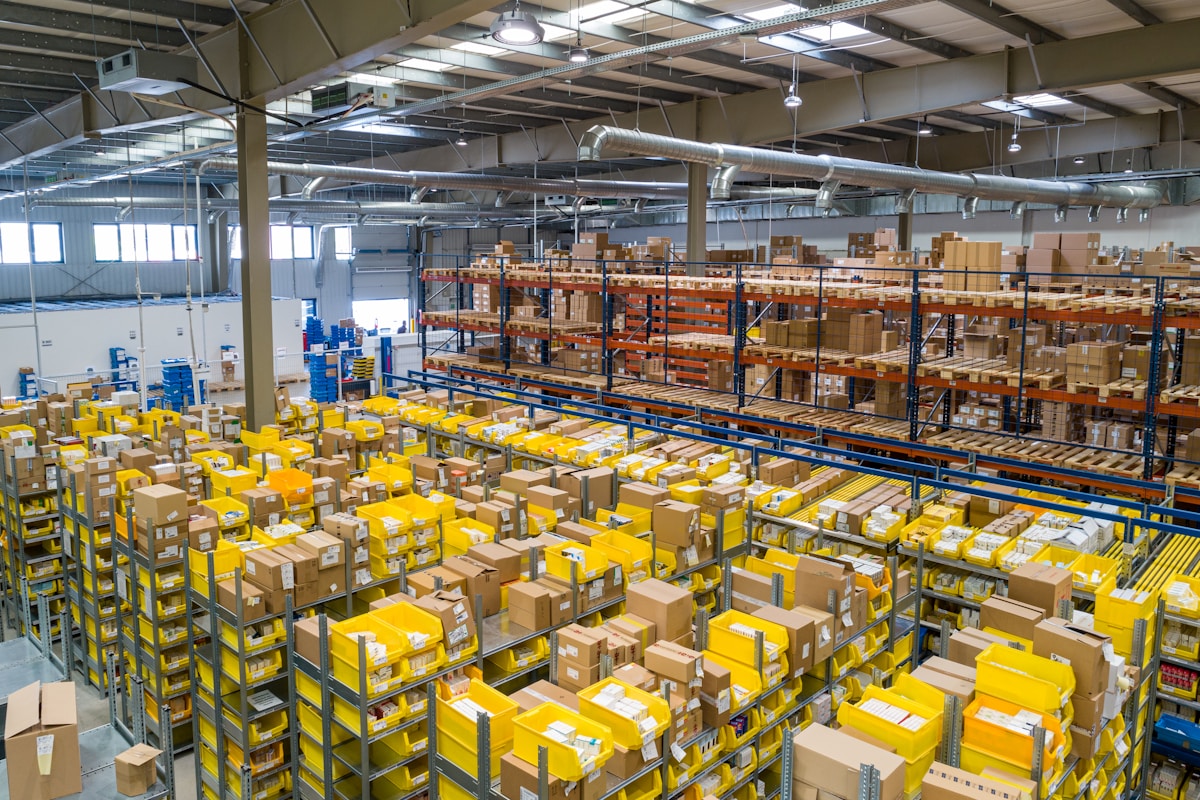
Traditional robot programming requires expert engineers to hand-code every behavior. An assembly-line robot performs the same weld millions of times. Changing the task means reprogramming. This does not scale to unstructured environments like homes or busy warehouses.
VLA models offer a different paradigm: train a single model on diverse data and let it generalize. A VLA-powered robot can pick up objects it has never seen, follow novel natural language commands, and adapt to new environments without manual intervention. This is embodied AI — AI that not only thinks but acts.
2. How VLA Models Work
VLA models operate through a three-layer architecture:
Layer 1: Vision Encoding
The vision layer uses Vision Transformers (ViTs) to extract features from camera images. Common encoders include:
- SigLIP: Maps images into the same semantic space as language
- DINOv2: Captures spatial and geometric features Many models use both in parallel — SigLIP for semantic understanding (what is this object?) and DINOv2 for spatial understanding (where is it?).
Layer 2: Language Understanding
The language layer interprets instructions using a pre-trained VLM backbone. When a user says "pick up the red mug," the model must parse the instruction, identify the target object, understand the action, and ground these concepts in the visual input. This grounding capability — connecting language to visual perception — is what separates VLA from simpler systems.
Layer 3: Action Decoding
The action layer translates understanding into motor commands using different approaches:
- Discrete tokenization (RT-2, OpenVLA): Actions are discretized into bins and treated as text tokens
- Flow matching / diffusion (π0, Octo): Continuous action distributions sampled for smooth control
- Regression heads: MLPs directly regress action values
The complete pipeline:
Camera Image + Language Instruction
    ↓
Vision Encoder → visual features | Language Encoder → semantic features
    ↓
Cross-Modal Fusion (shared Transformer)
    ↓
Action Decoder (tokenization / flow matching / regression)
    ↓
Motor Commands
3. VLA vs. Traditional Robotics
Traditional Pipeline: Sense → Plan → Act
Conventional robotics follows a modular pipeline: perception algorithms extract a structured world representation, a motion planner computes trajectories, and a controller executes them. Each module is engineered separately with its own assumptions and failure modes. Errors compound across modules.
VLA End-to-End Approach
| Aspect | Traditional Pipeline | VLA Models |
|---|---|---|
| Architecture | Separate modules | Single unified network |
| Programming | Hand-engineered rules | Learned from data |
| Generalization | Poor on novel objects/environments | Strong (web-scale pretraining) |
| Adaptation | Manual reconfiguration | Fine-tune with少量 data |
| Dexterity | Limited to programmed trajectories | Learns complex, smooth motions |
The key insight: VLA models treat robot learning as a foundation model problem, not a robotics engineering problem. By starting from a pretrained VLM with internet-scale knowledge and fine-tuning on robot data, VLA models inherit semantic understanding that traditional pipelines lack.
4. Mainstream VLA Models
RT-2 (Google DeepMind, 2023)
The landmark model that proved VLA feasibility. Built on PaLI-X (55B parameters), RT-2 treats robot actions as text tokens. By discretizing continuous actions into 256 bins per dimension and representing them as integers, actions become indistinguishable from language tokens. The model is co-fine-tuned on web-scale vision-language data and robot demonstrations.
Breakthrough: RT-2 showed emergent reasoning — understanding "pick up the object that could be used as a hammer" and selecting a rock, a task never seen in robot training data. It achieved 90% on the Language Table benchmark vs 77% prior SOTA.
Limitations: 55B parameters (too large for edge), closed-source, ~3 Hz inference, deterministic (single-mode) actions.
OpenVLA (Stanford, 2024)
Combines web-scale knowledge (from RT-2) with open-source philosophy (from Octo). At 7B parameters (8x smaller than RT-2), it outperforms RT-2-X by +16.5% on a 29-task benchmark.
Key innovation: Dual visual encoders — SigLIP for semantic understanding and DINOv2 for spatial understanding — fused via an MLP projector into a Llama 2 7B backbone fine-tuned on 970K robot demonstrations.
Why it matters: OpenVLA democratized VLA research. It runs on consumer GPUs and can be fine-tuned with LoRA (adapting 0.17% of parameters) on a single RTX 3090.
π0 and π0.5 (Physical Intelligence, 2024-2025)
A breakthrough in dexterous manipulation. Previous VLAs ran at 3-6 Hz — fine for pick-and-place but too slow for folding laundry or pouring water.
Key innovation: Mixture-of-Experts architecture — a VLM expert (3B PaliGemma-based) handles semantic understanding, while an action expert (300M) uses flow matching to generate smooth continuous actions at 50 Hz. The model outputs 50-action chunks in just 73ms.
Training: 903M timesteps from Physical Intelligence's fleet plus 90M from open datasets (OXE, BridgeData V2, DROID), covering 7 robot types and 68 tasks.
π0.5 (April 2025) extended to open-world generalization. In tests across 3 rental homes in San Francisco — completely new environments — π0.5-powered robots performed full kitchen clearing without per-home fine-tuning.
MINT-4B (Guangdong Smart Future, 2026)
A 4B-parameter model ranked among the top 3 general-purpose robot models globally by NVIDIA and international experts (June 2026), surpassing OpenVLA, GR00T, π, and UniVLA.
Key innovation: SDAT (Multi-Scale Frequency Domain Tokenization) decomposes actions into low-frequency tokens (global task intent) and high-frequency tokens (fine execution details). This cross-scale autoregressive framework solves the traditional VLA problem of blindly copying trajectories that fail when environments change.
Deployment: Serves as the "VLA cerebellum" for XiaoZhi S2 humanoid robots in education, exhibitions, government, and hospitality across China.
Helix (Figure AI, 2025)
A VLA model purpose-built for generalist humanoid control, achieving several robotics firsts.
Key innovation: Dual "System 1 + System 2" architecture. System 2 (7B VLM at 7-9 Hz) handles scene understanding and language grounding, compressing information into a latent vector. System 1 (80M cross-attention Transformer at 200 Hz) translates this into precise motor commands. This balances reasoning capability with real-time control.
Capabilities: First VLA to control the entire humanoid upper body (35 DoF including individual fingers). Runs two robots simultaneously on a single set of weights. Operates entirely on embedded low-power GPUs. In logistics deployment, achieved 4.05s per package with 95% barcode scanning success. Project Go-Big (Sept 2025) demonstrated the first humanoid learning navigation from egocentric human video — zero robot demonstrations needed.
UniVLA (HKU/OpenDriveLab, 2025)
Accepted at RSS 2025. A unified framework where vision, language, and action are all represented as discrete tokens in a shared vocabulary and modeled autoregressively.
Key innovation: Learns task-centric latent action representations from videos using VQ-VAE, without requiring action-annotated data. This enables learning from internet-scale human videos and deploying across different robot morphologies.
Results: 95.5% success on LIBERO (surpassing π0-FAST's 85.5%). The unified formulation also supports world modeling during post-training.
5. Challenges and Frontiers
Generalization
VLA generalization is impressive but not yet reliable. The VLM4VLA study (2026) found that VLM general capabilities (e.g., VQA performance) poorly predict downstream VLA task performance. The visual encoder is the primary bottleneck — suggesting a domain gap between VLM pretraining objectives and the spatial reasoning required for control.
Data Efficiency
VLA models require massive data — π0 trained on nearly 1B timesteps. Solutions include:
- Learning from human videos: UniVLA and Project Go-Big extract training signals from unlabeled human video
- Sim-to-Real: Training in simulation with domain randomization, fine-tuning on少量 real data
- Synthetic data generation
Sim-to-Real Gap
Models trained in simulation often fail on real hardware due to differences in physics, sensor noise, and appearance. Domain randomization helps, but the gap remains significant for dexterous tasks requiring precise force control.
Real-Time Constraints
VLAs must generate actions fast enough for real-time control. The trend is toward smaller, efficient architectures — Helix's dual-system approach and OpenVLA's LoRA fine-tuning are promising.
6. Industry Impact and Applications
VLA models are moving rapidly from research to deployment:
- Figure AI: Helix deployed in commercial logistics for package sorting
- Physical Intelligence: π0.5 tested on mobile manipulators in real rental homes
- Guangdong Smart Future: MINT-4B in XiaoZhi S2 humanoids across commercial venues in China
- Google DeepMind: RT-2/RT-X laid the foundation for Gemini Robotics
- NVIDIA: Researching World-Action Models (WAMs) combining video prediction with robot control
- Tesla and others: VLA approaches being integrated into generalist humanoid platforms
7. Getting Started
Best entry points in 2026:
- OpenVLA + LoRA — open-source, runs on single RTX 3090, fine-tune with 50-100 demos
- openpi — Physical Intelligence's framework for π0-class models
- Octo (93M params) — lightest option for resource-constrained settings
- LeRobot (Hugging Face) — standardized tools for collecting data and training VLAs
Conclusion
VLA models represent the convergence of foundation models and embodied intelligence. By unifying perception, reasoning, and control, they offer a path toward robots that understand natural language, adapt to new environments, and perform dexterous tasks without manual programming.
In just three years, we have gone from RT-2's proof-of-concept to Helix on commercial logistics floors and π0.5 cleaning unseen homes. As models become smaller, faster, and more data-efficient, the vision of general-purpose household robots powered by VLA models is moving from science fiction to reality.