Humanoid Robots 101: Types, Technologies & Key Players 2026
What Are Humanoid Robots?
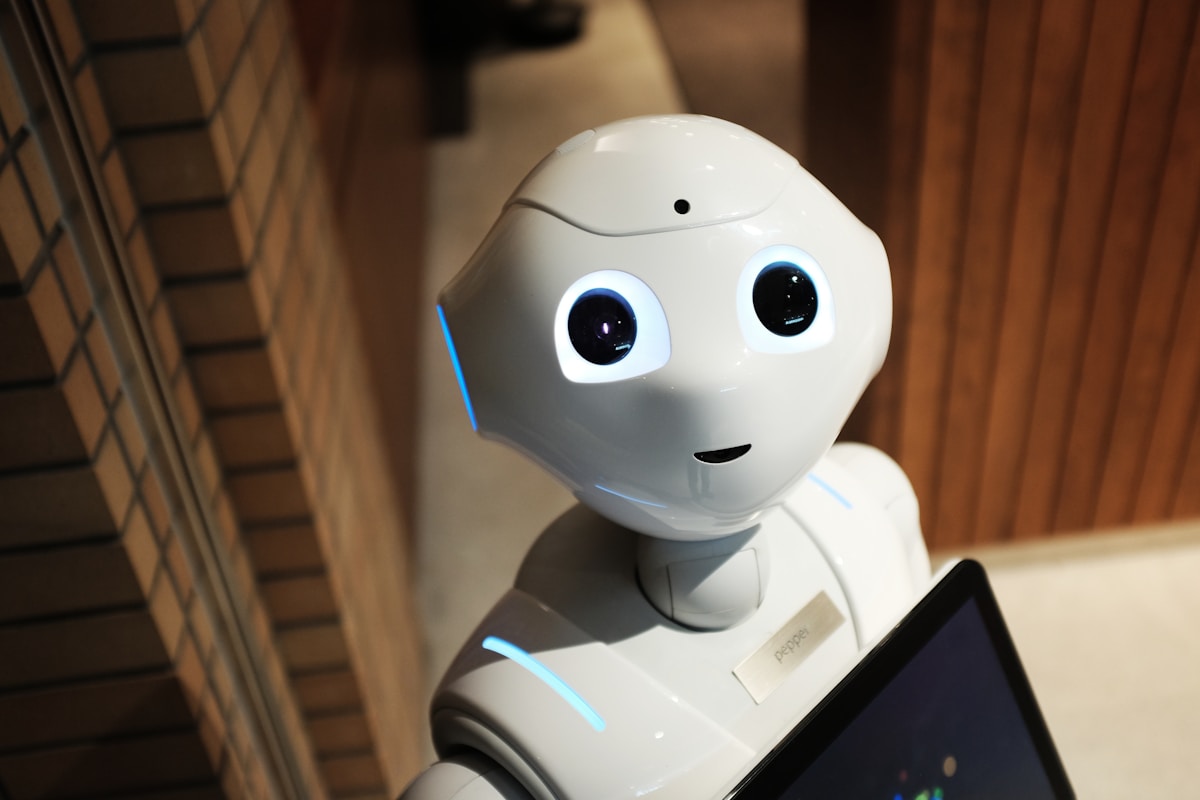
Humanoid robots are autonomous machines designed to resemble and function like the human body. Unlike traditional industrial robots — which are typically stationary robotic arms bolted to factory floors performing single repetitive tasks — humanoids are mobile, bipedal or wheeled platforms capable of navigating environments built for people and performing a wide range of physical tasks.
The defining characteristic of a humanoid robot is its anthropomorphic form factor: a torso, two arms, and (usually) two legs, with a structure that mirrors human kinematics. This design is not cosmetic — it is deeply intentional. By mirroring the human form, humanoid robots can operate in spaces designed for humans without requiring costly infrastructure modifications. They can climb stairs, open doors, use human tools, and work alongside people in factories, warehouses, hospitals, and homes.
A Brief History of Humanoid Robots
The dream of building machines in our own image stretches back centuries, but serious technical progress began in the 1970s:
-
1973 — WABOT-1 (Waseda University, Japan): The world's first full-scale humanoid robot. It could walk with its lower limbs, grasp objects with its hands, and communicate in Japanese. Though primitive by today's standards, WABOT established the foundational architecture that all subsequent humanoids would build upon.
-
1986-2000 — Honda's E-Series & ASIMO: Honda began a secret humanoid project in 1986, releasing the P2 in 1996 (the first self-regulating bipedal walking robot) and ASIMO in 2000. ASIMO became the world's most famous humanoid for two decades, showcasing dynamic walking, stair climbing, and running.
-
2009 — PETMAN & Atlas (Boston Dynamics): Boston Dynamics developed PETMAN for DARPA to test chemical protection suits, followed by the hydraulic Atlas in 2013. Atlas became legendary for its parkour, backflips, and gymnastic abilities, pushing the boundaries of dynamic locomotion.
-
2022-2024 — The AI Revolution: The integration of large language models and vision-language-action (VLA) models transformed humanoids from pre-programged machines into intelligent agents. Figure AI launched the Figure 01 in 2023, Tesla unveiled Optimus in 2022, and China's humanoid ecosystem exploded with dozens of new entrants.
-
2025-2026 — Commercialization Year: 2026 is widely recognized as the first year of large-scale commercial deployment. Figure delivered Figure 03 to BMW, 1X opened its NEO factory in Hayward with 10,000-unit capacity, Tesla began limited Optimus production in Fremont, and Chinese manufacturers like AgiBot and UBTECH shipped thousands of units.
Main Types of Humanoid Robots
Humanoid robots come in several form factors, each optimized for different environments and use cases:
1. Bipedal Full-Body Humanoids The most iconic type — two legs, two arms, full torso. Examples: Figure 03, Tesla Optimus, Atlas, Digit, 1X NEO, AgiBot A2. These robots excel in environments designed for humans (stairs, uneven terrain, narrow corridors) and are the primary focus of industrial and commercial deployment.
2. Wheeled Humanoids These replace legs with a wheeled base for stability and efficiency on flat surfaces. Examples: AgiBot G2, FF Futurist. The trade-off is excellent stability and energy efficiency on smooth floors, but inability to climb stairs or traverse rugged terrain.
3. Upper-Body-Only / Torso Systems Some robots focus solely on manipulation by mounting arms on a fixed or mobile base. Genesis AI's Eno (released June 2026) is a notable example — it uses a wheeled base with a foldable torso and two highly dexterous arms but no legs or head. The design philosophy: "human in function, not in form."
4. Compact / Miniature Humanoids Smaller, lighter robots like Unitree G1 (1.35m, 35kg) and Robotera's Xiaoxing (1.2m, 28kg) prioritize affordability, research accessibility, and safety for indoor use. While limited in payload, they serve as platforms for AI research, education, and light service tasks.
Core Technologies Powering Humanoid Robots
Walking and Balance Control (MPC & WBC)
Bipedal locomotion is one of the hardest challenges in robotics. Two complementary techniques dominate:
-
Model Predictive Control (MPC): MPC solves an optimization problem in real-time over a short prediction horizon (typically 0.5-2 seconds). It calculates optimal foot placements, ground reaction forces, and body trajectories while respecting dynamics, friction cone, and actuation constraints. This enables the robot to anticipate and react to changes in terrain.
-
Whole-Body Control (WBC): WBC coordinates all degrees of freedom simultaneously, prioritizing tasks hierarchically. For example, maintaining balance is the highest priority task, followed by torso posture, then arm movement, then head orientation. WBC maps high-level commands ("walk forward") into precise joint torques while ensuring stability.
Modern systems combine MPC (for planning) with WBC (for execution), running at 200-1000 Hz control loops. Reinforcement learning in simulation has also become a powerful tool — training locomotion policies in virtual environments that are then transferred to real robots (sim-to-real transfer).
Dexterous Manipulation
Hands are the most complex part of any humanoid. Leading robots now feature:
- Figure 03: 16 DoF hands with tactile sensors detecting forces as light as 3 grams
- Tesla Optimus Gen 3: 22 DoF hands with adaptive grip
- 1X NEO: 22 DoF per hand with tendon-driven actuation
- Robotera XHAND1: 12 fully active DoF, 80N grip force, fingertip tactile arrays with 100+ points of resolution
Vision-Language-Action (VLA) Models
The breakthrough technology of 2025-2026. VLA models unify visual perception, natural language understanding, and motor control into a single neural network architecture:
- Figure's Helix (Feb 2025): The first VLA to control an entire humanoid upper body at 200 Hz. Uses a "System 1 / System 2" architecture — a 7B-parameter VLM for scene understanding (7-9 Hz) paired with an 80M-parameter visuomotor policy for fast reactive control (200 Hz).
- NVIDIA GR00T: A foundation model for humanoid robots, enabling natural language instruction following.
- Robotera ERA-42: End-to-end VLA model deployed in logistics, manufacturing, and commercial service, handling 100+ manipulation skills.
Visual Perception & SLAM
Humanoid robots rely on multi-modal sensor fusion: stereo RGB cameras, LiDAR, depth sensors, IMUs, and tactile arrays. These feed into SLAM (Simultaneous Localization and Mapping) systems that build real-time 3D maps of the environment while tracking the robot's location.
Key Products Comparison (2026)
| Robot | Height | Weight | DoF | Payload | Battery | Key Strength | Target Price |
|---|---|---|---|---|---|---|---|
| Figure 03 | 168 cm | 61 kg | 41+ | 20 kg | 5 hrs | VLA (Helix), mass-production ready, tactile sensors | ~$20K-50K |
| Tesla Optimus Gen 3 | 173 cm | ~57 kg | 40+ | ~20 kg | ~8 hrs | Vertical integration, FSD AI reuse, scalable production | $20K-30K |
| Boston Dynamics Atlas (electric) | 150 cm | 89 kg | 28 | ~50 kg | 1-2 hrs | Unmatched dynamic motion, parkour, heavy lifting | Enterprise (high) |
| Agility Digit | 175 cm | 65 kg | ~30 | 16 kg | ~4 hrs | Amazon deployment, warehouse-optimized, proven ROI | $100K-250K (RaaS) |
| 1X NEO Gamma | 167 cm | 30 kg | 75 total | Light | 5.5 hrs | Home-safe design, tendon drive, 22dB quiet | $20K / $499 mo |
| Robotera L7 (Xingdong Jiyuan) | 171 cm | 65 kg | 55 | 20 kg | ~4 hrs | World-record jumping, VLA (ERA-42), dexterous hand | ~$50K-100K |
| AgiBot Expedition A2 | 169 cm | 69 kg | 40+ | ~15 kg | 2-3 hrs | Highest shipping volume, 106km walking Guinness record | $100K-190K |
| Unitree G1 | 127 cm | ~35 kg | 27+ | ~3 kg | ~2 hrs | Best value ($13.5K), research-friendly, foldable | $13,500 |
Market Size & Competitive Landscape (2026)
2026 marks the inflection point for the humanoid robot industry:
- Global market size: Estimated at $1.4 billion (Persistence Market Research) to $10.69 billion (Future Market Insights) depending on scope. All analysts project explosive growth: $19.6-248.9 billion by 2033-2036, with CAGRs ranging from 30-37%.
- Shipments: TrendForce predicts over 50,000 units shipped in 2026, a 700% increase from 2025. Chinese manufacturers account for approximately 90% of global shipments.
- Leading shipper: AgiBot has produced over 10,000 cumulative units by March 2026, making it the world's largest humanoid manufacturer by volume.
Competitive Landscape by Region:
China (85% of market share): Dominates production volume and supply chain. Key players include AgiBot (A2 series), UBTECH (Walker S2, 1000+ units produced), Robotera/Xingdong Jiyuan (L7, Q5), Unitree (G1, H1), Deep Robotics, Fourier Intelligence (GR-3), and Galbot (G1). Government support exceeds $20 billion in robotics subsidies. China's product iteration cycles are 3-6 months vs. 18 months for Western startups.
United States (~8% market share): Leads in AI foundation models, VLA technology, and premium products. Key players: Figure AI ($39B valuation, BMW deployment), Tesla (Optimus, vertical integration), Boston Dynamics (Atlas, Hyundai-backed), Agility Robotics (Digit, Amazon-backed), and 1X Technologies (NEO, Norwegian-American, OpenAI-backed).
Europe (~4%): Focused on precision manufacturing and safety standards. Key players: PAL Robotics (Spain), NEURA Robotics (Germany, 4NE-1), and Genesis AI (France, Eno).
Japan & South Korea: Traditional robotics powerhouses. Honda, Toyota, and Samsung are investing heavily but moving more cautiously than Chinese or American counterparts.
Key Trends Defining 2026
-
From Demo to Deployment: 2026 is the year humanoids moved from staged demonstrations to real-world factory floors. The key metric has shifted from "can it do a backflip?" to "what's its uptime and ROI?"
-
VLA Models Become the Standard Brain: Every major humanoid now ships with a VLA model — Helix (Figure), ERA-42 (Robotera), GR00T (NVIDIA), or proprietary systems. These models enable zero-shot generalization to novel objects and tasks.
-
Cost Collapse: Actuator costs dropped from ~$1,200 (2022) to under $400 (2026). Unitree's G1 sells for $13,500 — less than a compact car. Tesla targets $20,000-30,000 for Optimus.
-
RaaS (Robot-as-a-Service) Emerges: Agility, 1X, and AgiBot all offer subscription models. AgiBot's RaaS starts at €899/day, making humanoids accessible for short-term events and seasonal demand.
-
Home Entry Begins: Figure 03 features a soft textile exterior, wireless charging, and tactile sensors for safe home operation. 1X NEO is designed specifically for homes at $20,000 pre-order. Broader home deployment is expected in 2027-2028.
Conclusion
Humanoid robots have arrived as a commercial reality in 2026. What was once science fiction is now being deployed in BMW factories, Amazon warehouses, Chinese logistics centers, and Korean hospitals. The technology stack — from MPC/WBC locomotion control to VLA models for reasoning — has matured to the point where these machines can perform useful work alongside humans.
For beginners looking to understand this space: the key distinction is no longer between "can it work?" but "where does it work best?" Bipedal humanoids excel in stairs-heavy environments. Wheeled platforms are more efficient on flat floors. Some robots prioritize dexterous manipulation; others prioritize endurance or speed. The market is segmenting, and the right answer depends entirely on the use case.
As NVIDIA CEO Jensen Huang declared at CES 2026: "The ChatGPT moment for Physical AI is here." And unlike ChatGPT — which lives entirely in the digital world — humanoid robots are bringing artificial intelligence into the physical spaces where we live, work, and interact.