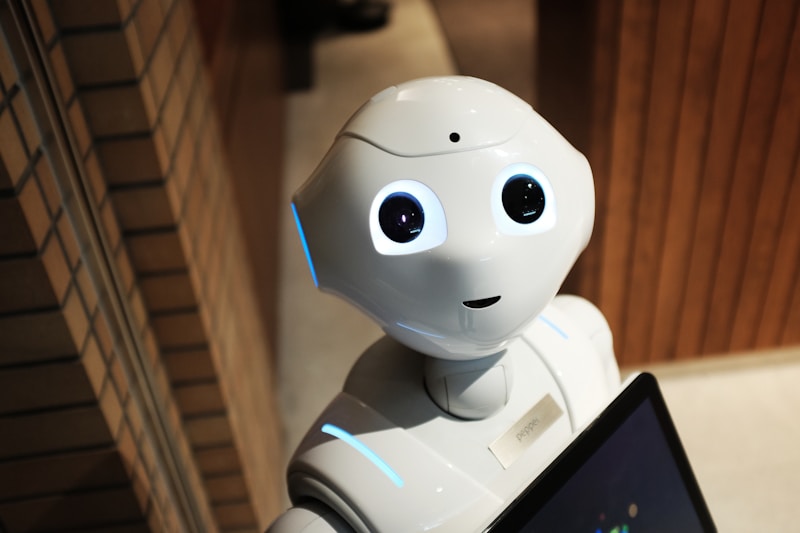
At the ICRA 2026 exhibition in Vienna, a dozen Chinese robotics companies demonstrated robots folding clothes, pouring water, and screwing bolts. The booths were crowded. One European engineer quietly asked a colleague: "Is this really fully autonomous?"
No one could answer with 100 percent certainty.
That moment captures the paradox gripping China's embodied AI industry. In the first half of 2026 alone, ¥46 billion ($6.4 billion) flooded into the sector — enough cash, if laid out in hundred-yuan notes, to pave a round trip from Beijing to Shanghai. But what that money actually bought remains an open question.
The Numbers Are Staggering
According to data from IT Juzi, China's embodied AI and robotics sector saw 288 financing events involving 226 companies in H1 2026, with disclosed funding exceeding ¥46 billion. Extending the window to July 2025–June 2026, the figures become even more dramatic: 503 deals and over ¥96 billion ($13.3 billion).
But capital is concentrating rapidly. The top five companies — Qianxun Intelligence,曦望Sunrise, Xinghaitu, Zibianliang Robot, and Jijia Shijie — raised approximately ¥17.1 billion collectively, accounting for 37% of all funds. The top 20 took 70% (¥33 billion), leaving the remaining 200+ companies to split less than 30% (¥12.4 billion). Qianxun alone raised ¥4.5 billion, completing four rounds in as many months.
The investor landscape has shifted. Traditional VCs remain active — Hillhouse Capital participated 13 times, Sequoia 10 times. But for deals exceeding ¥1 billion, a different cast dominates: Baidu, ByteDance, Xiaomi, Meituan, SAIC, and a growing roster of government-backed investment platforms. Industrial capital and state-owned capital now account for over 40% of total funding. In large-ticket transactions (¥100 million+), state capital participation rate reaches 42%.
The 2026 "Mass Production Year" Narrative
Industry observers have dubbed 2026 the "Year of Mass Production." Unitree sold over 5,500 humanoid robots last year — ranking first globally — with revenue surging from ¥159 million to ¥1.699 billion. In March, Agibot (智元) rolled off its 10,000th general-purpose embodied robot.
Yet these headline numbers belie a more sobering reality beneath the surface.
The Cautionary Tale of Dalu
Dalu (达闼), once valued at over ¥20 billion ($2.8 billion) with total fundraising exceeding ¥5.4 billion, serves as a stark warning. In the first seven months of 2025, the company generated only ¥1.4 million in product revenue — while recording a net loss of ¥84.25 million. A company that once commanded stratospheric valuations had effectively zero commercial traction.
As one industry insider noted: "Raising money has never been the same as building a sustainable business."
The Data Bottleneck
The fundamental constraint is not hardware — it's intelligence. The industry is converging on a sober consensus: the acute scarcity of high-quality physical world interaction data is the true ceiling for embodied AI.
Globally, usable real-robot data amounts to roughly 500,000 hours. By comparison, large language models consume text data equivalent to 20,000 times that volume. As Xinghaitu's Gao Jiyang put it: "Robots get smarter by learning more, not by being built cheaper."
But learning a single action requires data that cannot be scraped from the internet — it must be gathered through thousands of real-world trials. Companies are spending heavily: Xinghaitu launched a million-hour real-data initiative in Yizhuang; Qianxun deployed over 300,000 collection points nationwide; Ant Lingbo (蚂蚁灵波) filtered 20,000 hours from petabytes of raw data just to train version 1.0 of its model. JD.com announced plans to accumulate 10 million hours within two years.
Yet results disappoint. An algorithm lead interviewed by Zhixiedao admitted off the record: "We spent tens of millions to collect 100,000 hours of data, and our model capability improved by only 5%. Skills learned in Factory A will almost certainly fail when deployed in Factory B."
This generalization problem — the inability to transfer learned behaviors across environments — remains the industry's most stubborn technical challenge.
Technology in Its Infancy
One practitioner offered a blunt scoring system for current embodied capability: if the ultimate goal is 100 points, today's industrial robotic arms score about 50, wheeled platforms 40, quadrupedal robots 30, bipedal humanoids merely 15, dexterous hands 5, and the accompanying AI capability just 3.
The technology roadmap is equally unsettled. Over the past year, VLA (Vision-Language-Action) models and world models have shifted from opposition toward convergence. But regardless of which path prevails, the maturity of these models remains embryonic.
A persistent and underappreciated problem: there is no objective standard for evaluating embodied AI models. As noted by Xu Huazhe of Poke Robot, the industry has become obsessed with benchmarking and demonstration comparisons. But ordinary users cannot test a robot the way they can test a large language model. The true test, he argued, is simple: throw the robot into an unfamiliar environment and measure how long it takes to become productive.
China's Geographic Division of Labor
The embodied AI ecosystem has developed a clear geographic logic. Beijing leads with 81 deals worth ¥18.85 billion — 40% of national total — housing the "brains" companies like Qianxun, Xinghaitu, and Galaxy General. Guangdong's 71 deals lean toward hardware, dexterous hands, and joint modules. The Yangtze River Delta (Jiangsu, Zhejiang, Shanghai) accounts for 117 deals, focusing on real-world deployments: industrial spraying, cleaning services, and home陪伴.
Put simply: Beijing supplies the brains, Guangdong the hands and feet, the Yangtze River Delta the workplaces.
Urban competition is intensifying. On May 8, Shenzhen's Bao'an district jointly launched the "Embodied Intelligence Port" with Qianhai — a sprawling industrial landmark spanning over 5 million square meters, already attracting Tencent, Galaxy General, and Luming Robot. Shanghai aims to deploy 100,000 humanoid robots in factories by 2030. And on May 1, Hangzhou enacted China's first dedicated local regulation for embodied intelligent robots.
Policy Signals and Parallels
On June 9, MIIT and SASAC jointly launched an annual "real-scenario, real-training" initiative, targeting mass deployment of robots in industrial, service, and specialized settings by year-end, aiming to form 100+ high-value application scenarios with thousand-unit-level deployment capabilities.
The Development Research Center of the State Council projects the market will reach ¥400 billion by 2030 and exceed ¥1 trillion by 2035.
But policy money comes with strings attached. The hidden costs of state capital include geographic lock-in, performance guarantees, and exit restrictions. The solar photovoltaic industry's recent history offers a cautionary parallel: in 2024, 24 major光伏 companies reported combined losses exceeding ¥28.6 billion. Embodied AI's current state capital participation rate already mirrors the solar industry's early stages.
Winners and Survivors
Export remains a viable path — Unitree generates over half its revenue from overseas markets. However, European markets present their own challenges: different user habits and higher regulatory thresholds.
The industry is at a classic inflection point. Optimists point out that the railway bubble, the internet bubble, and the新能源 bubble all burned hot before real industries emerged from the ashes. Pessimists do the math: in H1 2026, seed and angel rounds totaled less than ¥1.3 billion — just 3% of the entire sector. A young founder without a big-name backer or academic pedigree, even with a genuine breakthrough in mind, may not even get past an investor's receptionist.
Dalu's collapse is not an isolated case in hard-tech. Every time the industry looks back, the common factors are the same: overestimating the speed of technological maturity, underestimating the difficulty of engineering, and discovering too late that fundraising ability is not a proxy for survival capability.
Many companies will fall by the wayside. They will disappear, becoming case studies in future post-mortems. This is not pessimism — it is the necessary clearance that every emerging industry must endure.
The real answer for this industry lies not in funding announcements, not in government brochures, not in leaderboard rankings. It lies in the robots still running on factory floors. Whether they can complete a full shift, whether customers voluntarily place repeat orders, whether the European engineers put down their phones — not because the movements are beautiful, but because those movements actually get the job done.