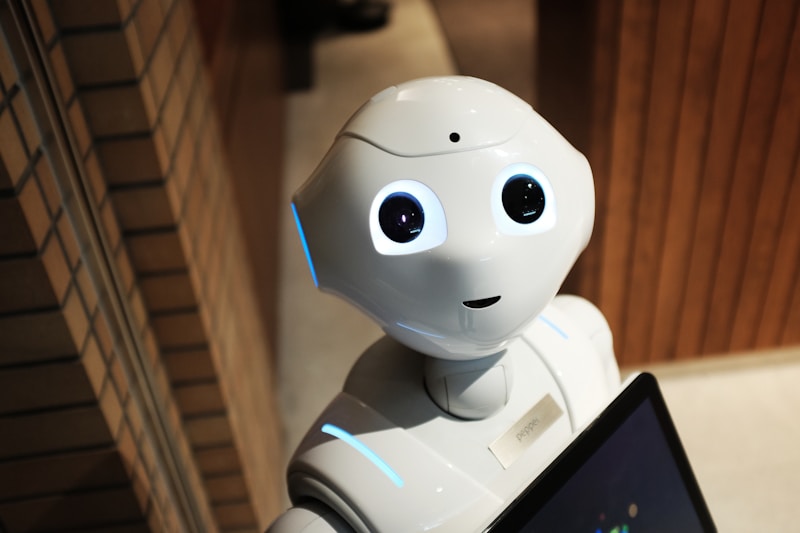
2026: The Year of Embodied AI Mass Production - 34.5 Billion Yuan in Funding and State Grid's 6.8 Billion Procurement
A Defining Moment for Embodied Intelligence
2026 has officially become the year that embodied intelligence moves beyond concept hype and enters the critical inflection point of large-scale commercialization. With 34.5 billion yuan in capital flowing into the industry, the sector is experiencing unprecedented growth momentum.
Three Key Signals of Mass Production Inflection Point
1. Capital Frenzy: 34.5 Billion Yuan Across the Value Chain
Since the beginning of 2026, funding in the embodied intelligence sector has exceeded 34.5 billion yuan. Capital is penetrating from complete robots to the entire industrial value chain:
- Upstream: Joint modules and sensors are seeing surging investment
- Midstream: Embodied brain R&D enterprises are receiving large-scale funding
- Downstream: RaaS (Robot as a Service) platforms become deployment hotspots
Leading enterprises have already achieved 10,000-unit level mass production. Overall robot costs have dropped by over 50% compared to two years ago, with core component domestic localization rates exceeding 90%, clearing price barriers for large-scale commercialization.
2. Standard Implementation: First Industry Standard Coming in June
The Ministry of Industry and Information Technology has approved the release of 'YD/T 6770-2026 Artificial Intelligence - Key Foundation Technology - Embodied Intelligence Benchmark Testing Methods', officially implementing on June 1st. This represents the first industry standard in the embodied intelligence field, establishing a unified benchmark testing framework that accelerates technology iteration and market standardization.
3. Scenario Explosion: B-End Special Scenarios Lead the Way
China State Grid plans centralized procurement of approximately 8,500 embodied intelligence devices this year, with total investment of about 6.8 billion yuan, focusing on four major scenarios:
- Power inspection
- Live-line work
- Emergency rescue
- Warehousing and logistics
In the automotive sector, Wuxi automobile factories have adopted a 'flexible production line + embodied AGV' model, compressing production line reconstruction time from 72 hours to 3 hours. XCMG Group has seen product qualification rates increase by 12% after introducing welding robots.
Technological Leap: From Paper to Practice
VLA Model: The Super Brain of Embodied Intelligence
The new generation of humanoid robots equipped with VLA (Vision-Language-Action) models now feature:
- Over 59 degrees of freedom for fine manipulation
- 15 types of human emotional recognition capabilities
- Sub-millimeter level environmental perception
The core breakthrough: Direct generation of action sequences through natural language instructions, eliminating the need for manual programming of trajectory points and achieving 'zero-code production change'.
Dexterous Hand Revolution
2026 marks the 'iPhone moment' for dexterous hands:
- Can complete wire insertion and flexible part handling that traditional industrial robots struggle with
- Integrated multi-dimensional tactile and force sensors for human-like fine operation
- Domestic localization rate reaches 92%, with costs dropping to ten-thousand-yuan levels
Data Closed Loop: Evolution from Simulation to Reality
The industry is building an intelligent evolution chain based on high-quality physical world data collection and generation, achieving a complete closed loop of perception-cognition-decision-execution-feedback. The global first embodied intelligence developer conference, EAIDC2026, was held in Shenzhen, with all tasks conducted in real physical environments.
Industry Landscape: China Leading Globally
Accelerated Domestic Localization
Core component domestic localization rates have comprehensively broken through:
- Joint modules: 93% (Green Harmonic, Jiangsu Leili)
- Dexterous hands: 92% (Weihua Mechanical, Yuandian Technology)
- 3D vision sensors: 88% (Orbbec, Sunny Optical)
- Motion controllers: 85% (Inovance Technology, Estun)
Three-Tier Formation
- First Tier (Leading Enterprises): UBTECH, Xiaomi, Tesla Optimus - achieved 10,000-unit mass production, full industrial chain layout
- Second Tier (Specialized Enterprises): Zhiyuan Robotics, Dalu Technology - focused on embodied brains or core components, leading in technology
- Third Tier (Innovative Enterprises): University lab incubation teams - focused on niche scenarios and cutting-edge technology exploration
Future Outlook: From Functional to Excellent
Cost Reduction Targets
With large-scale mass production and technological maturity, humanoid robot overall costs are expected to drop by another 50% before 2028, entering the 100,000-yuan range and opening the home service market.
Full Scenario Penetration
From industrial manufacturing and special operations to home services and medical care, embodied intelligence will penetrate all walks of life as both productivity tools and life assistants.
Safety Ethics Focus
As embodied intelligence becomes more widespread, safety standards and ethical norms will accelerate improvement, ensuring technology develops for the greater good.
Related Articles

Unitree Launches Embodied Intelligence App Store with Four New Product Lines
5/10/2026
Physical AI Raises $6.4 Billion in Q1 2026: Humanoid Robots Move from Science Project to Institutional Investment Thesis
5/9/2026

345 Billion Yuan Flows into Embodied AI: Capital Shifts from Complete Units to Full Industry Chain
5/8/2026