The China Mechanical and Electrical Integration Technology Application Association has released a comprehensive report identifying the top 10 embodied AI technology achievements for 2025-2026, marking a critical transition period as the industry moves from technical validation to real-world deployment.
According to data cited in the report, China released 51 humanoid robot products in 2025, with national-level manufacturing transformation funds mobilizing over 180 billion yuan into the humanoid robotics sector. Chinese companies now account for 84.7% of global consumer and industrial humanoid robot shipments.
The top 10 achievements cover:
1. General-Purpose Embodied AI Models — VLA (Vision-Language-Action) unified architecture has become mainstream, with models from Google DeepMind (RoboCat), Physical Intelligence (π0), and Chinese innovators like Zhiyuan Robot (GO-1 with ViLLA architecture), BAAI (RoboBrain), and X Square Robot (WALL-A) achieving cross-platform generalization.
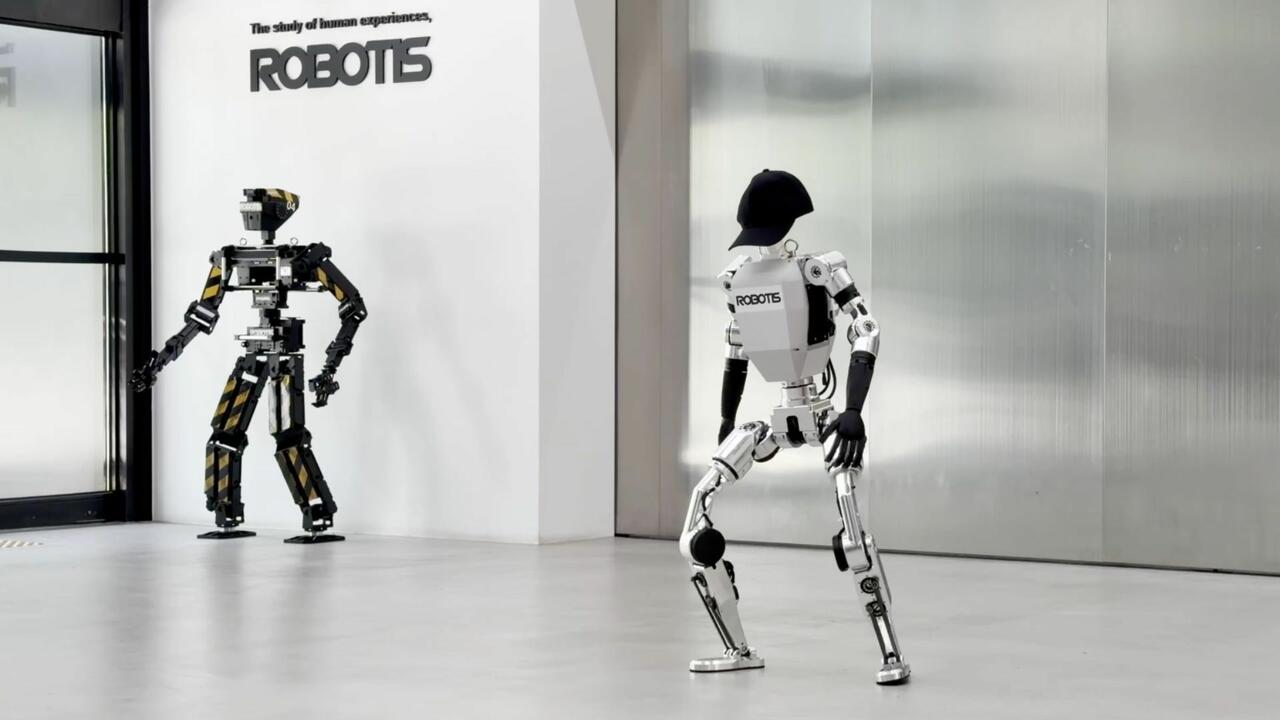
2. Full-Body Motion Control — Humanoid robot motion control has moved from demonstration stunts to engineering-grade capability through RL+MPC Sim-to-Real pipelines. Unitree's H1 (47kg) with self-developed high-torque joints, Boston Dynamics' industrial-focused Atlas, and Tesla's factory-integrated Optimus represent the state of the art.
3. Multimodal Perception — Real-time fusion of vision, touch, and audio sensing has advanced significantly, with Meta's SAM 2 enabling real-time video segmentation and Chinese teams achieving breakthroughs in LiDAR-vision fusion systems.
4. Cloud-Edge Collaborative Architecture — 5G/5G-A networks enabling millisecond-level data loops between cloud clusters and edge devices, with Huawei Cloud Robo and domestic chip makers like Moore Threads providing hardware foundation.
5. Industrial Embodied Intelligence — Figure AI's 1,250+ hours at BMW Spartanburg, Tesla Optimus at Gigafactory Texas, and Chinese deployments at BYD, FAW, and Foxconn signal the beginning of systematic industrial adoption.
6-10: Flexible Actuators, Few-Shot Learning, Human-Robot Interaction, Open-Source Ecosystems, and Safety Governance — Additional achievements include advances in dielectric elastomer artificial muscles (Tsinghua University), zero-shot learning for novel tasks (BAAI RoboBrain), the OpenLoong open-source project (12 founding members), and the new national standard system for humanoid robots.
The report concludes that 2026 H1 global humanoid robot orders exceeded 12,000 units, with Chinese enterprises accounting for over 75%. The core challenge has shifted from 'whether we can build it' to 'whether it can reduce costs and improve efficiency,' with reliability, energy consumption, and total lifecycle cost becoming the key differentiators for scaled deployment.