China's Ministry of Industry and Information Technology (MIIT) and the State-owned Assets Supervision and Administration Commission (SASAC) have jointly issued the "Notice on Jointly Carrying Out the 2026 Humanoid Robot and Embodied Intelligence Real-Scene Training Special Action," marking a major push to transition the humanoid robotics industry from demonstration validation to commercial operation.
The initiative, reported by the Economic Daily on June 12, aims to move humanoid robots from "performance mode" — demonstrating technical ceilings and single-point capabilities — to "work mode" requiring stability, durability, continuous operation, and cost-effectiveness in real-world environments.
Three Key Targets by End of 2026
- Enable humanoid robots to begin "work mode" operations in representative application scenarios
- Consolidate over 100 high-value application scenarios to form reusable solutions
- Achieve deployment capacity at the 10,000-unit scale, driving supply chain collaboration and cost reduction
Three Deployment Directions
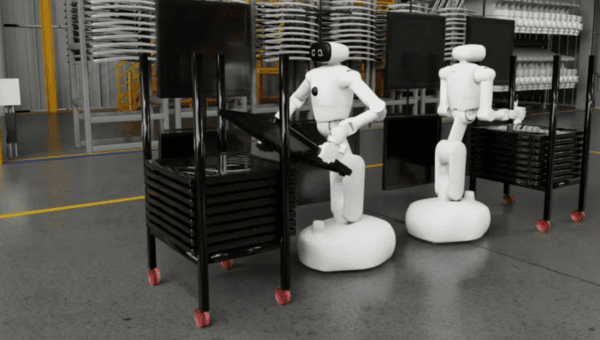
The initiative selects three major directions: Industrial Manufacturing (addressing labor shortages in standardized environments), Civil Services (tapping market opportunities with flexible human-machine collaboration), and Special Operations (high-risk environments where humanoid robots offer irreplaceable advantages).
Industry Context
2026 is widely regarded as the first year of large-scale commercial deployment for humanoid robots in China. According to public data, the global embodied intelligence market reached approximately 195.25 billion yuan in 2025, with China accounting for nearly half.
The Real-Scene Training approach addresses the gap between laboratory testing and real-world deployment. By creating standardized, shared training grounds that integrate scenario resources, data, computing power, and technical achievements, the initiative aims to reduce R&D costs and build a closed loop of "training-iteration-application-re-optimization.